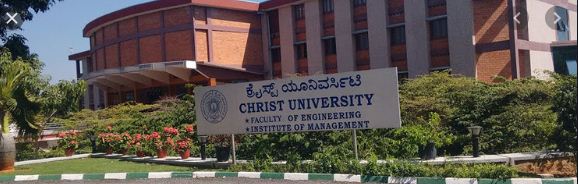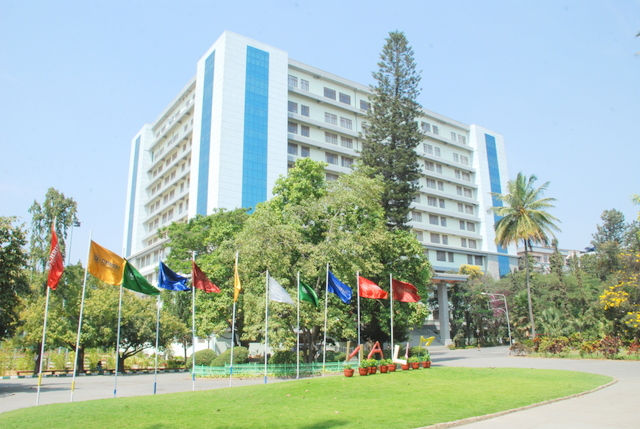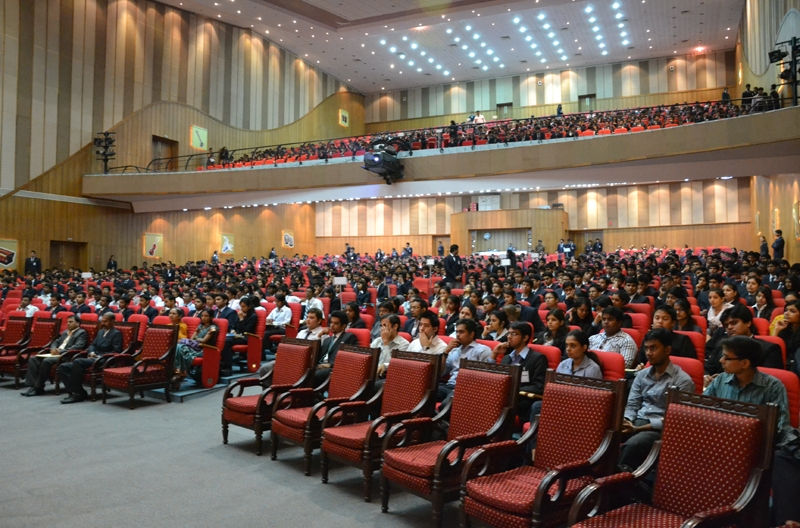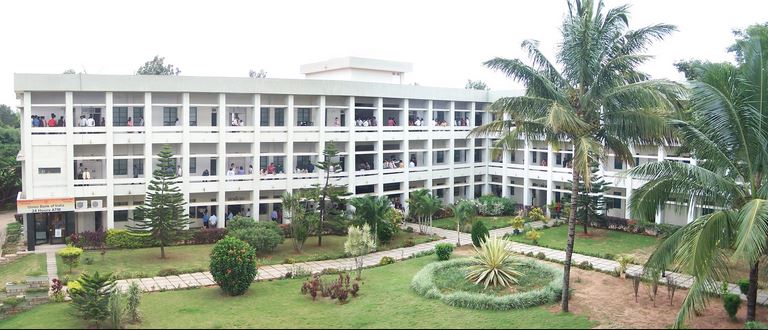
CHRIST (Deemed to be University) was born out of the educational vision of St Kuriakose Elias Chavara, an educationalist and social reformer of the nineteenth century in South India. He founded the first Catholic indigenous congregation, Carmelites of Mary Immaculate (CMI), in 1831 which administers CHRIST (Deemed to be University).The University Grants Commission (UGC) of India conferred Autonomy to Christ College in 2004 and identified it as an Institution with Potential for Excellence in 2006. In 2008 under Section 3 of the UGC Act, 1956, the Ministry of Human Resource Development of the Government of India, declared the institution a Deemed to be University, in the name and style of Christ University. One of the first institutions in India to be accredited in 1998 by the National Assessment and Accreditation Council (NAAC), Government of India, and subsequently in 2004, 2016, 2022 CHRIST (Deemed to be University) is currently accredited with ‘A+’ Grade. The University is ranked among top 100 universities in India at 60 in the NIRF India Ranking 2024 of Ministry of Education, Government of India.
Courses Offered
Diploma
Course
Diploma in Psychology (Life Skills, Sexuality & Personal Safety Education) program is aimed at giving students sound theoretical background in Life Skills, sexuality and reproductive health along with practical experience in conducting sessions in life skills and personal safety .The programs are being offered to all individuals in the community who may be interested in learning these skills for both personal and professional use.
Duration
1 Years
Eligibility
Applicants should have completed 12th grade and be enrolled in a Bachelor degree program in any stream.
Higher Studies
Bachelor's Degree in Psychology
Master of Social Work (MSW)
Master of Arts (M.A.) or Master of Science (M.Sc.) in Psychology
Diploma in Life Skills for Leadership and Community Development aims to impart Life Skills education through a combination of theoretical inputs and practical application in community based interactions. The programs are being offered to all individuals in the community who may be interested in learning life skills for both personal and professional use.
Duration
1 Year
Eligibility
Applicants should have completed 12th grade and be enrolled in a Bachelor degree program in any stream.
Higher Studies
B.A. (Psychology, Sociology, Political Science, Economics)
Ph.D. in Biotechnology is a high-level research program focused on using biological systems and organisms to develop innovative products and technologies. It integrates life sciences with technology and is ideal for individuals passionate about advancing healthcare, agriculture, and industrial biotech solutions.
Duration
3-6 years
Eligibility
Applicants must have a postgraduate degree in a relevant discipline with a minimum of 55% aggregate marks. Admission typically requires passing the university's entrance exam and subsequent selection rounds, although candidates with valid national-level test scores (like UGC-NET or CSIR-NET) are exempted from the entrance test.
Higher Studies
Postdoctoral Research in Molecular Biology, Immunology, or Genetic Engineering
Fellowship Programs (DBT, DST, ICMR)
Specialized Training in Biopharma Regulatory Affairs
Career Opportunities
R&D Scientist in Biotech or Pharmaceutical Companies
Ph.D. in Zoology is offered by Christ University Bengaluru. Christ University is approved by University Grant Commission (UGC) New Delhi. Zoology is studying animal behavior, different species, classification of animals, cell biology, and developmental biology. The candidate can choose to research any topic under zoology, and the department allocates a supervisor or mentor to guide him throughout the research. The candidate can find research materials in libraries, lab experiments and arrive at data conclusions through appropriate tools and techniques. The drafts of the research subject can be shown and discussed with the mentor in intervals. After the mentor approves the final report candidate, would be awarded the PhD in a ceremony. The PhD holders can find various opportunities in colleges, universities, schools, zoos, museums, national parks, wildlife, laboratories, animal clinics, museums, veterinary hospitals as zoologists, wildlife biologists, naturalists, environmental specialists, zoo scientists, research directors, principal, dean, professors, wildlife conservationists.
Duration
3-6 years
Eligibility
Applicant must have completed a relevant postgraduate program (Master's degree) with a minimum of 55% aggregate marks. Admission is typically based on the university's entrance examination, research skill assessment, and personal interview, though candidates with valid national-level test scores like UGC-NET or CSIR-NET may be exempted from the entrance test.
Students will be exposed to the world of digital learning through Wikipedia. The course includes Introduction to Wikipedia which will include the origin and development of Wikipedia. Training will be given to write, edit and publish articles especially in Indian Languages. Students will also be taught aspects like media ethics, policies and legal aspects with regard to Wikipedia writing
Duration
45 Hours
Eligibility
Student must be currently enrolled in an undergraduate program. The course is open to students from all disciplines and generally does not have specific academic prerequisites beyond general student status.
Russian is an introductory course for absolute beginners. This level will provide practice on all the lexical and grammatical items. The detailed practice will strongly develop the four essential skills of learning Spanish: understanding, speaking, reading, and writing. Beginning with alphabets, it will go on to cover phonetics, pronunciation, numbers and basic colors, which are some of the fundamental things that a student learns. Then the course goes a little higher in grammar, vocabulary, sentence formation, paragraph writing, comprehension and speaking
Duration
45 Hours
Eligibility
Available to any currently enrolled undergraduate student from any discipline at the university. No specific prerequisites are required beyond active student status, an interest in the social sector, and meeting standard attendance and academic criteria.
This course aims to provide students with a window of opportunity to learn about the language and culture of Japan. Students can choose to pursue further studies in this language, and also consider shaping a successful career out of it. The course includes learning Japanese characters (Hiragana) and some Chinese characters (called Kanji) adapted to the Japanese language.
Duration
45 Hours
Eligibility
As long as they are currently enrolled and have not previously studied Japanese in Classes 11 and 12. The course is intended for beginners with no prior knowledge of the language.
Vedic Mathematics is a collection of Techniques/Sutras to solve mathematical arithmetic in easy and faster way. It consists of 16 Sutras (Formula) and 13 sub-sutras (Sub Formulae) which can be used for problems involved in arithmetic, algebra, geometry, calculus, conics. In the Vedic system 'difficult' problems or huge sums can often be solved immediately by the Vedic method. These striking and beautiful methods are just a part of a complete system of mathematics which is far more systematic than the modern 'system'. Vedic Mathematics manifests the coherent and unified structure of mathematics and the methods are complementary, direct and easy.
Duration
45 Hours
Eligibility
Generally available to any currently enrolled undergraduate student at the university, regardless of their primary stream. The course is designed to make mathematics interesting and improve computational skills for all learners.
Spanish is an introductory course for absolute beginners, and as such, will establish a strong foundation and promote learning for years of study to come. This level will provide practice on all the lexical and grammatical items. The detailed practice will strongly develop the four essential skills of learning Spanish: understanding, speaking, reading, and writing. This is a class with lots of fun mixed with emphasis on grammar and vocabulary. Beginning with alphabets, it goes on to cover phonetics, pronunciation, numbers and basic colors, which are some of the fundamental things that a student learns. Then the course goes a little higher in grammar, vocabulary, sentence formation, paragraph writing, comprehension and speaking.
Duration
45 Hours
Eligibility
Requires students to be currently enrolled and to have no prior knowledge of the language from Classes 11 and 12. The course is a beginner-level introduction for students across all disciplines.
The course is for Non-native speakers to learn basic Korean language. Part I presents four lessons on the Korean writing system. Provides four preparatory lessons, each containing two conversation tasks and two communicative tasks which introduce the speaking dimension. Consists of six core lessons, each containing three conversation tasks and two communicative tasks as well as related reading and listening comprehension activities to further enhance the learner's communication skills.
Duration
45 Hours
Eligibility
Student must be currently enrolled in a degree program at the university and typically have no prior knowledge of the language at the Class 11/12 level.
Open Electives course in French is a brand new four-level French course for adults and covers levels A1 to B2 of the Common European Framework of Reference for Languages (CEFR) The series encourages dynamic progression whilst developing vocabulary acquisition, phonetics and grammatical understanding. In addition, this series of course books helps students prepare for the DELF examinations, and provides mock exams and test material.
Duration
45 Hours
Eligibility
Student must be currently enrolled in a degree program and have no prior knowledge of the language. This is because the course is designed for beginners.
Students will be exposed to the use of Kannada Language both in oral and written forms. In the introductory sessions Kannada alphabets, words, simple sentence writing and basic grammar will be dealt with.
Duration
45 Hours
Eligibility
Designed for current students at the university who are non-native speakers or beginners in the language. Students who have studied Kannada in their 11th and 12th standards are typically not eligible for this introductory course.
This course will familiarize the students with the concept of corporate social responsibility. The evolution of CSR has far reaching consequences on the development sector in India. The collaboration of companies and NGOs with the community has initiated a new paradigm of change in the country. The students will have an overview of the theories and the frameworks developed in the area of CSR. The paper will discuss a few prominent case studies of CSR.
Duration
45 Hours
Eligibility
Requires the student to be currently enrolled in a degree program. These courses are designed to be interdisciplinary, meaning they are available to students from any department.
This course is primarily designed to introduce students from various disciplines to the various research methods used in social sciences. One of the primary objectives of this certificate course is to enable the students to conceptualize, formulate and conduct research projects. This course will definitely help the students from the streams of social sciences, humanities and management studies to pursue their dissertation work at Post Graduate level. In addition, this will give a clear understanding to the students from the science streams about the different methods used in social sciences. In order to ensure this, the students will be familiarized in a practical manner with the process of research, methods and tools that are widely used in social sciences. As a practical component of this course, students will be divided into groups and encouraged to prepare a survey report of their choice using a suitable method of research.
Duration
45 Hours
Eligibility
Currently enrolled undergraduate students at the university, regardless of their specific stream or discipline.
The Non Governmental Organisations(NGO), due to their unique vision and outlook of a just, equitable and sustainable society have gained prominence as agents of social and economic change. This increasing recognition has also sharpened the demand for increased professionalism. This course provides training for students for effective NGO management.
Duration
45 Hours
Eligibility
Available to any currently enrolled undergraduate student from any discipline at the university. No specific prerequisites are required beyond active student status, an interest in the social sector, and meeting standard attendance and academic criteria.
To have an effective human resource practice, the knowledge of Labour Legislation is an indispensable part. Especially in the Indian scenario, the Labour welfare and security is paramount in industrial relations solutions. Thus to enable the students to have a good base in Labour Law, this paper focuses on various Labour legislations, dispute solving machineries and Judicial setup. There are modules with conceptual, descriptive, analytical, practical and legal aspects.
Duration
45 Hours
Eligibility
Currently enrolled undergraduate student at the university, as it is designed for students across all disciplines. There are generally no specific prerequisites required beyond active student status and meeting the university's standard attendance and academic criteria.
The certificate course engages students, academicians and clinicians on classical and contemporary issues in the field of psychoanalytic studies. It aims to facilitate reading and discussion on case studies and clinical issues addressed in psychoanalytic literature. Using group discussions and workshops as a pedagogy the present course focuses on the core theoretical issues in psychoanalytic practice. Through online lectures and seminars from nationally and internationally acclaimed psychoanalyst, the course aimed at understanding the current practice trends in psychoanalysis.
Duration
45 Hours
Eligibility
Undergraduate and Postgraduate students of Psychology (Optional)
Undergraduate and Postgraduate students of Non- Psychology students (Mandatory)
This certificate course offered by CHRIST University Bengaluru is endorsed by Hank Nunn Institute, Living Learning Experience, UK, Institute of Mental Health, Nottingham, Personality Disorder Network, UK and The Consortium of Therapeutic Communities, UK. The Living Learning Experience (LLE) is designed to help students develop reflective practice skills in the context of a structured program of activities designed to explore the experience of being a member of a residential community or mental health unit. The course is based on the Therapeutic Community methodology It has been running every year in the UK. The workshop promotes understanding of processes in groups, and how to harness them to therapeutic benefit, through a combination of teaching and experience.
Duration
45 Hours
Eligibility
Undergraduate and Postgraduate students of Psychology (Optional)
Undergraduate and Postgraduate students of Non- Psychology students (Mandatory)
Stress is one of the most common and yet ineffectively managed psychological phenomena. It is common knowledge that stress affects people irrespective of age, profession and life situations and while we have an instinctual understanding of stress and associated feelings, defining stress can be tricky because we all react to it differently. However, stress can be defined two-fold; firstly in terms of adjustive demands placed on an organism and secondly the organism’s internal biological and psychological response to such demands caused by exposure to various life experiences. More importantly, stress can result from both positive and negative life events.
Duration
45 Hours
Eligibility
Undergraduate and Postgraduate students of Psychology (Optional)
Undergraduate and Postgraduate Non- Psychology students (Mandatory)
Open Electives course in Planning and Management of NGOS offers the following courses in cooperation with Department of Psychology, Christ University. This is an ‘add-on’ module to enhance the knowledge and skills of students studying in various UG and and PG program. The primary aim of these modules is capacity building. Anyone interested in the disability sector/NGO sector can take these additional modules. This course enables students to understand global policies and national commitments on poverty alleviation and the role of NGOs, registration of Non-profit organizations, trusts and societies, financial management of NGOs , FCRA regulations, fund raising, planning tolls for management of NGOs.
Duration
45 Hours
Eligibility
Undergraduate and Postgraduate students of Psychology (Optional)
Undergraduate and Postgraduate students of Non- Psychology students (Mandatory)
CBR NETWORK –IRC offers the following courses in cooperation with Department of Psychology, Christ University. This is an ‘add-on’ module to enhance the knowledge and skills of students studying in various UG and and PG program. The primary aim of these modules is capacity building. Anyone interested in the disability sector/NGO sector can take these additional modules. This course enables students to understand global policies and national commitments on protection of rights of children and principles of holistic child development, developing low cost developmental aids and materials for early intervention with children with delays in development.
Duration
45 Hours
Eligibility
Undergraduate and Postgraduate students of Psychology (Optional)
Undergraduate and Postgraduate students of Non- Psychology students (Mandatory)
This course will give students an insight into disability, handicap and impairments, stigma and myths of mental illness, legislations for disability, treatment methods in psychiatry and rehabilitation models. Students will also gain an understanding of the types of available and effective models for psychosocial rehabilitation and will undergo basic skills training in these models. Emphasis will also be given to assessment in rehabilitation, case management and sensitization on ethics in psychosocial rehabilitation. The methodology for this course will be structured through lectures, group discussions, field visits, individual presentations and screening of short movies on rehabilitation agencies. This course will be a good foundational course for those interested in higher academic pursuits or vocations in this field.
Duration
45 Hours
Eligibility
Undergraduate and Postgraduate students of Psychology (Optional)
Undergraduate and Postgraduate Non- Psychology students (Mandatory)
Understanding crime and investigating it have become important needs for national security, preservation of social values, and intellectual and economic securities and interests of organizations within a country. The course aims at imparting introductory knowledge in Concept and definitions of crime, Changing crime scenarios present internationally and specifically within our socio-cultural background. Lecture topics will include criminal profiling, psychological testing of personality, disability assessment, and basic information about civil and criminal investigation procedures, judicial presentation of relevant information, and constitutional liabilities and rights of individuals. The pedagogy will be through lectures, regular class room interactions, and demonstrations of techniques used in Forensic Psychology. Demonstrations on EEG, Polygraphy and of the related techniques will be done at the Axxonet Brain Research Laboratory close to CHRIST (Deemed to be University).
Duration
45 Hours
Eligibility
Undergraduate and Postgraduate Non- Psychology students (Mandatory)
There are global requirements for trained professionals who understand the area of Forensic Psychology and this course aims to be a stepping stone to enter a career in Forensic Psychology. The main aim of the advanced course in Forensic Psychology is to impart scientific knowledge of the etiology of crime and knowledge in the state of art psychological and neuropsychological techniques used for understanding criminal behavior. The course will have lectures and practical demonstration of Forensic Neuropsychology techniques used for testing suspects and accused persons.
Duration
45 Hours
Eligibility
Final Year Undergraduate Psychology, Psychology Honours, Postgraduate Psychology , &MSW Students (Optional)
The aim of this certificate course is to orient students to the field of health psychology. In the fast paced world we live in today, people are developing many health problems and a lot of them are a result of a stressful and faulty lifestyle. An increasingly technology- driven era, is increasingly leading to people feeling isolated, despite being constantly connected to the rest of the world. Mental health is an area that is being increasingly researched for its role in physical health issues. Many individuals are turning to meditation, yoga and other spiritual practices for peace and solace. Health psychology plays a key role in understanding the interface between psychological and physical aspects of health and overall well being. Health psychology has immense importance in the prevention and management of chronic diseases. Through this course students would be able to examine the relationship between psychological, physical, behavioral, social and environmental factors and their interaction with ones health and well being. They would also get an understanding of various health hazards and the role of psychology in preventing and managing chronic health problems. It would make them aware of the health - illness continuum and help them adapt to their environments better. Lectures, class discussions and visits to health centers would be used to meet the objectives of this course
Duration
45 Hours
Eligibility
Undergraduate and Postgraduate students of Psychology (Optional)
Undergraduate and Postgraduate Non- Psychology students (Mandatory)
The Course outlines the value of counselling skills in interpersonal interactions. This course aims to equip students with effective human relationship skills to facilitate effective interpersonal functioning, personal growth and development. The course is built on a developmental, humanistic, experiential framework where participants are encouraged to reflect on their personal awareness as an ongoing process with the development of helping skills. This course will provide students with an opportunity to develop basic skills of counselling and guidance thereby enabling them to be better people helpers. In addition students are also given a broad context for practicing their counselling skills by taking into consideration life transitions, developmental lags and other major/minor life events.
Duration
45 Hours
Eligibility
Undergraduate and Postgraduate students of Psychology (Optional)
Undergraduate and Postgraduate Non- Psychology students (Mandatory)
Creative dance therapy is the therapeutic use of expressive movement to achieve a balance between emotional, cognitive, social and physical facets in individuals. This discipline uses body movement to enhance emotional / physical and mental integration in individuals. It brings about positive changes in feelings, cognition, physical functioning and behavior. It is used with normal functioning people as well as those with emotional, behavioral, perceptual and physical challenges. This introductory course incorporates basic level theory and practice of Creative Dance Therapy. Sessions will train students to build their awareness, appreciation and enhance their knowledge of dance as a therapeutic modality. The course will expose students to the theoretical framework and Practical application of movement activities with different kinds of populations with therapeutic needs.
Duration
45 Hours
Eligibility
Undergraduate and Postgraduate students of Psychology (Optional)
Undergraduate and Postgraduate students of Non- Psychology students (Mandatory)
Team building is a generic skill that has immense potential to facilitate personal and professional growth. For a student, learning the rubrics of how to be part of a team, contribute effectively and enable a team to meet its goals can be of immense help both within and outside the classroom context. The course aims to introduce students to the concept of groups/teams and make them understand how individuals act differently when they are alone and in groups, to make them aware of the responsibilities as a leader and as a team member and to aid them to choose, build, maintain and lead teams in different spheres of life.
Duration
45 Hours
Eligibility
Undergraduate and Postgraduate students of Psychology (Optional)
Undergraduate and Postgraduate Non- Psychology students (Mandatory)
Open Electives course in Planning and Managing Citizens Charters offers the following courses in cooperation with Department of Psychology, Christ University. This is an ‘add-on’ module to enhance the knowledge and skills of students studying in various UG and and PG program. The primary aim of these modules is capacity building. Anyone interested in the disability sector/NGO sector can take these additional modules. This module is part 3 of the modular courses offered by Open Electives course in Planning and Managing Citizens Charters and will help students understand the role of citizenship and civic engagement in community development and the functioning of NGOs.
Duration
45 Hours
Eligibility
Undergraduate and Postgraduate students of Psychology (Optional)
Undergraduate and Postgraduate students of Non- Psychology students (Mandatory)
Yoga is the art and science of living, and is concerned with the evolution of mind and body. Therefore, yoga incorporates a system of disciplines for furthering an integrated development of all aspects of the individual. The emphasis of the course is on positive physical and psychological wellness. The focus is on physical postures or asanas, pranayama or breathing techniques and sustained concentration or dhyana. Through the practice of physical postures or asanas, the spinal column as well as the muscles and joints are maintained in a healthy and supple state. Pranayama is important not only for optimizing breathing potential but also for cultivating emotional stability and freeing mental and creative energies in a constructive way. Dhyana is important for controlling the turbulent mind and channeling focused mental energy creatively. The practice of Yoga creates a balance in the total personality. This course has been structured as a skills training program.
Duration
45 Hours
Eligibility
Undergraduate and Postgraduate students of Psychology (Optional)
Undergraduate and Postgraduate Non- Psychology students (Mandatory)
The course has been developed bearing in mind the current education system in India which emphasizes on teaching the curriculum and not the student. Thus it is necessary to understand the students’ challenges and difficulties – whether they originate from within one’s self or from outside. This in turn creates a cycle of constant stress and pressure on teachers, students and parents. While some students have been able to cope successfully in this inflexible educational system, most of them cannot withstand it. They succumb to various academic, behavioral and psychological problems. Under these circumstances, the course aims to help students to become aware of these academic issues and the use of appropriate enhancement skills and techniques for better performance in academics and in life, at large. The methodology for this course will include group discussions, case studies, role plays, audio-visuals, input sessions, and project work.
Duration
45 Hours
Eligibility
Undergraduate and Postgraduate students of Psychology (Optional)
Undergraduate and Postgraduate Non- Psychology students (Mandatory)
In this course the relationships between brain and behavior will be explored. The course will focus mainly on cortical and cognitive abilities. Initial lectures will be a general introduction to neuro-anatomy and methods used by neuropsychologists. This will be followed by lectures focusing on specific brain functions, such as motor functions, object recognition, memory and so on. Throughout the course students will learn about the relationships between brain and behavior from brain injury cases (e.g., head injuries, strokes, tumors etc.) as well as from research done on brain- intact individuals. Readings will include studies with patients who have central nervous system dysfunction resulting from trauma or illness, as well as studies that utilize neuroimaging with healthy individuals. At the end of the course the student will have an understanding of how the brain is organized and how it accomplishes some behaviors and cognitive functions.
Duration
45 Hours
Eligibility
Undergraduate and Postgraduate students of Psychology (Optional)
Undergraduate and Postgraduate students of Non- Psychology students (Mandatory)
Introduction to Hypnosis offers an orientation to basic hypnotic induction. Hypnosis is a scientifically verified and effective technique that can promote accelerated human change. This course will equip the participant to practice self- hypnosis and is particularly suited for individuals seeking to make a positive change in their lives It is an excellent self help tool for self healing, enhancing personality and working on issues like stress management, self confidence, self esteem, concentration and goal accomplishment. In addition, it is one of the most effective ways to reach deep meditative/ thoughtless state easily. It helps one to achieve deep relaxation in a short time without any external aid. This course will help to inform a beginning practitioner of the exact nature of hypnosis, thus dispelling the many misconceptions propagated by media, hearsay and misinformation.
Duration
45 Hours
Eligibility
Undergraduate and Postgraduate students of Psychology (Optional)
Undergraduate and Postgraduate Non- Psychology students (Mandatory)
Life skills are defined as “the abilities that enable individuals to deal effectively with the demands and challenges of everyday life”.Life skill program are designed with the objective to enhance the well-being in young students and empower them to effectively cope with risky situations they encounter in daily lives.
Duration
45 Hours
Eligibility
Undergraduate and Postgraduate students of Psychology (Optional)
Undergraduate and Postgraduate Non- Psychology students (Mandatory)
In the post-globalization era, issues, debates and concepts in gender studies have changed both at national and international levels. While building on the rich experience of the past, the certificate course on Gender, Diversity and Social Transformation aims at grappling with the emerging issues and incorporating a gender and diversity perspective in to social science studies.
Duration
45 Hours
Eligibility
Undergraduate and Postgraduate students of Psychology (Optional)
Undergraduate and Postgraduate Non- Psychology students (Mandatory)
This is an interdisciplinary course that seeks to provide students with an understanding of the processes and structural mechanisms involved in the facilitation of peace and de-escalation and resolution of conflicts. Issues related to peace and conflict are discussed at macro levels such communities, organisations, inter-group and international agendas. The student will also debate on the philosophical underpinnings of the formation and role of societies, societal ideals of utopia and the underlying dystopia. It aims to introduce students to the analysis of conflict, violence and peace. The course will examine conflicts at interpersonal, community and national / international levels. Students will gain an historical understanding of the nature of social conflict and will examine theories of the origins of conflict and violence. The course will also explore what peace with justice means in various settings. Diverse perspectives of peace and security will be examined including cultural, religious and feminist.
Duration
45 Hours
Eligibility
Undergraduate and Postgraduate students of Psychology (Optional)
Undergraduate and Postgraduate Non- Psychology students (Mandatory)
At the heart of social work value system there is a concern for the well being of all people, it becomes crucial that the well being as the crux needs to be considered and emphasized as a focus area. Certificate course on Adolescent well – being is designed to develop training quality in students. This course will enable students to learn about adolescence and major areas of intervention for the adolescents.
Duration
45 Hours
Eligibility
Student must be currently enrolled in an undergraduate program
This course introduces concepts of social welfare and social services. The course aims to nurture the students interest and skills to contribute the welfare needs of society. The Content of this course aims to introduce the professional social work, Welfare needs and methods.
Duration
45 Hours
Eligibility
All currently enrolled undergraduate students at the university, irrespective of their major or stream.
Addiction studies are designed to help students to develop an understanding of substance and technology (behavioral) addictions from bio-psychosocial perspective. This paper focuses on familiarizing the students about its various concepts, developmental process and effects. Students will examine both disorders pertaining to substance and technology (behavioral). There will also be a focus on vulnerable populations to problematic use of substance and technology. The consequences of addictions will be studied at the individual, academy, daily routine life, occupational, family, community and societal levels. This course will draw on current research in the field of addictions, and will emphasize critical thinking and analysis of the current controversies in the field. The students will have an overview of the theories, models, frameworks adopted in the area of substance and technology, Internet, addiction.
Duration
45 Hours
Eligibility
Available to any currently enrolled undergraduate student from any discipline at the university. No prior specialized academic background is needed, and the course counts towards general elective credit requirements.
MA Economics program aims to form students with deep knowledge of economic theory and skill in empirical methodology to form ethically well-grounded students with ability for incisive reasoning. The program seeks to strike a sound balance between theory and application along with an interdisciplinary dimension without diminishing the focus on Economics. This approach is meant to help students face the dynamic challenges in terms of academics and the market. In line with this approach the program has a combination of courses related to economic theory, methodology and two streams of specializations which, on the one hand meet the needs of corporate employment and on the other create the ability of applying economic theory to development problems of the country. More specifically students will be equipped to take up careers in academics, business consulting and analytics, civil society and activist organisations, the public sector and international civil services.
Duration
2 Years
Eligibility
Candidates applying for the above program must possess a recognized undergraduate degree with minimum 50 percent marks
The Master of Philosophy in Economics is a one year program designed and well-substantiated for smooth transition into advanced research including doctoral level (PhD), and is suitable for academia, researchers and corporate associates alike. It is designed primarily for students who plan to pursue research in areas like microeconomics, financial economics, macroeconomics, and related areas in economics and finance.
Duration
2Year
Eligibility
Basic eligibility for the program is a pass at the Postgraduate level examination with an aggregate of 55% marks or equivalent grade in Economics from any recognized University in India.
The Masters program in English with Communication Studies aspires to sustain and revive an academic interest in literary and cultural theories. The papers offered are as contemporarily relevant as possible, even eclectic. A conscious effort is made to ensure that theories are grounded in textual readings, wherever possible. Testing and evaluation patterns aim at fostering a culture of research rather than an exam driven system, which will enhance student reading and creativity. In keeping with practical demands, ELT, communication study papers and the internship component are skill based and endeavor to make the program application oriented.The program will offer one value added course per semester at the Postgraduate level for the first three semesters alone. Value added courses provide students an opportunity to develop discipline specific and inter-disciplinary skills. These courses will give the adequate training to the students to develop their own interests and aptitudes. The objective is to help them enhance and gain a nuanced understanding of their curriculum.
Duration
2 Years
Eligibility
A candidate who has passed any Undergraduate degree examination with 50 % aggregate marks from any recognized University in India or abroad recognized by UGC / AIU is eligible to apply.
The proposed method for the MA in International Studies program has been conceived for real beginners or people desirous of enriching their linguistic knowledge for professional use. The immediate practice of the acquired linguistic competencies kindles in the learner the curiosity and the interest to observe, question and finally the competence to use them .This course allows the students to acquire communicative skills, the mastery of which is absolutely essential for minimal exchanges for an adult beginner.
Duration
2 Years
Eligibility
Graduation completed in any stream, from a recognized educational Board. A minimum aggregate score of 50% (45% for SC/ST/OBC candidates) at the level of graduation.
The Master of Philosophy in Media Studies offered by the Department of Media Studies, CHRIST University Bengaluru aims at research skill development and knowledge production in the areas of Print, Radio, Television, Films, Internet, New Media, Development Communication and Global Communication. The Program desires to give a formal research platform for those who are interested in contributing newer questions and concerns related to Media Studies. The M.Phil. Program in Media Studies will be conducted based on a credit system of one year and consisting of two semesters. The candidate has to submit the Dissertation by the end of second semester, after the completion of the course work. The course aims at enhancing the capacity of professing, prospective and practicing teachers/ lecturers and media professionals, who will be able to take up full-time research and at creating a resource pool of teachers, research scholars, industry professionals and work as the bridge programme for Ph.D. The M.Phil. course is envisaged to contribute to the growth and development of the education sector of the country. The course will create opportunities to share and disseminate research in the field of Communication.
Duration
2 Year
Eligibility
Basic eligibility for the program is a pass at the Postgraduate level examination with an aggregate of 55% marks or equivalent grade in: Masters in Journalism, or Mass Communication, or Journalism & Mass Communication, or Communication, or Audio-Visual Communication, or Electronic Communication. Or Any master’s degree with relevant experience in the field of Media. Or Faculty in colleges and universities with interest in Media Studies. Or Any master’s degree with an aptitude in Media Studies. From any recognized University in India or abroad recognized by UGC / AIU are eligible to apply. (Applicants who are in the final year of their studies should have secured 55% or above aggregate in all the Semesters / Years of Undergraduate Examinations conducted so far. Students writing their final degree examinations in March-May 2019 are also eligible to apply.
The Masters in Performing Arts is envisioned for students who have a strong base of dance and are looking for avenues beyond a performing career. The program hopes to give a structured intervention at the Masters level of related aspects like writing, music, and theater. The primary aim of the program is not just to help the students hone their skills of dance exclusively but also gain knowledge about the various other aspects which will help them gain an integrated and holistic sense of dance as an art form. Thus, apart from Bharatanatyam being the core of the curriculum, each semester will also have, alongside, courses on Carnatic Music, theater, make up, creative movement therapy, choreography and so on.
Duration
2 Years
Eligibility
Pass in BA in Performing Arts with specialization in dance with an aggregate of 50% marks or equivalent grade awarded by any recognized University in India or abroad recognized by UGC / AIU are eligible to apply.
Master’s Program in Philosophy aims at providing a comprehensive synthesis of various philosophical disciplines to develop a critical and analytical approach to all major areas of human inquiry. The primary philosophical subjects are presented in such a way as to give the students a harmonious view of the humans, the world and God, based on the heritage of perennially valid philosophies in the East and the West.
Duration
2 Years
Eligibility
The basic eligibility for pursuing this course is that the student should have cleared their graduation from a recognized institute.
Inter-religious harmony is a much felt need of our times, especially in the context of growing religious fundamentalism. Genuine seekers in all religions can certainly contribute to this harmony, provided they are supported by systematic study and research. In order to consolidate the theological formation of Christian religious persons in India, it is important to provide opportunities to study the specific identity and mission of religious life in relation to other vocations and forms of Christian life in the Church and world. This theological formation needs to be contextualized and imparted, particularly on the basis of biblical theology and the Magisterium of the Church in general, and of FABC, CBCI, CRI and the local churches of India in particular. The postgraduate program in Theology of Religious Life would promote and form the religious men and women with a profound understanding of their identity and mission in the Church, contextually and inter-religiously. Conscious that the Church is in constant dialogue with the culture, this program provides a milieu of reflection on ecumenical and inter-religious dialogue, especially with the forms of radical living of religion in these traditions.
The proposed method for the MBA (T&T) program has been conceived for
beginners or people desirous of enriching their linguistic knowledge for professional use in the tourism
industry. The immediate practice of the acquired linguistic competencies kindles in the learner the
curiosity and the interest to observe, question and finally the competence to use them.
Duration
2 Years
Eligibility
The minimum eligibility requirements for this course is a Bachelor’s degree in any discipline with a minimum aggregate of 45-50%.
M.Sc. in Psychology (Human Resource Development and Management) offered by the Department of Psychology, is a two-year full-time program, which prepares students for applications of psychological knowledge in organizations/ industries. This course is interdisciplinary in nature and is offered to those students who wish to achieve professional expertise in the management of human and social sides of work organizations. Since all organizations are essentially human, managing the human side is seen as the most critical element in organizational success. The program in H.R.D.M attempts to equip students with wide range of competencies and skills and also provide training in various personnel functions.
Duration
2 Years
Eligibility
A candidate who has passed any Undergraduate degree examination with 50 % aggregate marks from any recognized University in India or abroad recognized by UGC / AIU is eligible to apply.
Master of Arts in International Studies (MAIS) is an inter-disciplinary program; students integrate and apply knowledge across disciplines in order to analyze global issues and problems. It equips students with analytical and critical skills to understand contemporary international politics and prepare them for a range of professions that require knowledge of international affairs. The Program is designed to provide graduates the expertise and skills appropriate for a range of public and private sector careers where an advanced knowledge and understanding of contemporary international societies is integral to their work.
Duration
2 Years
Eligibility
A candidate who has passed any Undergraduate degree examination with 50% aggregate marks from any recognized University in India or abroad recognized by UGC / AIU is eligible to apply.
The M.Phil. in International Studies is an two years course which offers intellectually rigorous training in the recent history of world politics, theoretical approaches to the study of IR, and a plurality of research methods. The course equips students with the skills they require to undertake research and study at an advanced level and also to undertake many forms of professional work in the field. Entry is competitive and students come from a wide range of backgrounds and nationalities. This program offers the chance to undertake a substantial piece of work that is worthy of publication and which makes an original contribution to international relations. The objective of the course is to give a thorough mastery of the major facts, methodologies and perspectives in the field, as well as to develop research skills. This is supplemented by a specialized course work.
Duration
2 Year
Eligibility
Basic eligibility for the program is a pass at the Postgraduate level examination with an aggregate of 55% marks or equivalent grade in a relative disciplines from any recognized University in India or abroad recognized by UGC / AIU are eligible to apply.
The Department of Psychology offers two year full-time M.Sc Course in Counselling Psychology. Master’s course in Counselling Psychology is an advanced course aimed at competence building among the students from a holistic and an interdisciplinary perspective. Counselling Psychology is a specialized area in the discipline of Psychology that provides professional help to individuals to enhance their personal and interpersonal functioning across the lifespan with a focus on emotional, social, vocational, educational, health, developmental and organizational issues. Counselors facilitate individuals and groups to improve and adjust to demanding situation in highly effective way.
Duration
2 Years
Eligibility
A candidate who has passed any Undergraduate degree examination with 50 % aggregate marks from any recognized University in India or abroad recognized by UGC / AIU is eligible to apply.
The M.Phil. (Master of Philosophy) programmers research based degree intended principally to be a well-founded transition into the advanced research at a doctoral level (Ph.D), in which the researcher will aspire for a higher disciplinary and methodological competence in research. It includes a primary intensive course work in the general and specific research methodologies, two electives from the respective area of research, paper presentations in research colloquia, design of a research proposal and its defense in a colloquium and the final M.Phil dissertation along with its evaluation and defense. Scholars are receive orientation on writing articles for publications in peer reviewed journals, and communicating research findings to academic and other audiences.
Duration
2 Years
Eligibility
Basic eligibility for the program is a pass at the Postgraduate level examination with an aggregate of 55% marks or equivalent grade in Psychology from any recognized University in India.
The Department of Psychology offers a two-year full-time M Sc program in Psychology with specialization in Clinical Psychology. Keeping pace with the disciplinary advances the program would address knowledge about psychological functioning at individual and social levels in an all-encompassing manner. With the goal of acquiring specialized knowledge, the program would allow students to nurture their academic interest in clinical psychology, along with personal growth and awareness.
Duration
2 Years
Eligibility
A candidate who has passed Undergraduate degree examination with 50 % aggregate marks and 50% of marks in the cognate subject (Psychology) from any recognized University in India or abroad recognized by UGC / AIU is eligible to apply.
Curriculum is Designed to prepare competent & Professional Educationist, who will be able to take up diverse role in the field of education. The two year program aims at developing competency in research methodology, management & leadership in Educational Institutions. Further the course aims at preparing Educationists who will innovate & deliver effective learning recourse's, developing proficiency in curriculum development.
Duration
2 Years
Eligibility
A candidate who has passed any Undergraduate degree examination with 50 % aggregate marks from any recognized University in India or abroad recognized by UGC / AIU is eligible to apply.
M.A. Educational Leadership and Management program is aimed at preparing competent and professional educators. Program will help in developing competency in management and leadership in educational institutions. On completion of the program the students will understand the nature, purpose and philosophy of education and develop an understanding of the psychology of the learner. They will also develop competency in educational research methodology and developing effective learning resources
Duration
2 Years
Eligibility
Candidates applying for the above programs must possess a recognized undergraduate degree with minimum 50 percent marks.
The M Phil Program in Social Work offered by CHRIST University Bengaluru is a research based program (research degree) which is meant to produce social work professionals in the most advanced and innovative social work research methods and equip to take up a careers in academics or research, and pursue doctoral programs in social work. The program aims at providing students with opportunities to examine emerging specialties in the field of social work by employing scientific research methods. The intensive training as part of the M Phil program will generate interest in evidence-based practice in social work.
Duration
2 Years
Eligibility
Basic eligibility for the program is a pass at the Postgraduate level examination with an aggregate of 55% marks or equivalent grade in Social work or relative disciplines from any recognized University in India or abroad recognized by UGC / AIU are eligible to apply.
Master of Philosophy Program in Sociology is aimed at generating future researchers who would be equipped with an ability to develop a critical understanding of social realities. This Program is a research degree and it would therefore be beneficial for individuals who wish to pursue a career in research, be it in academics or in development sector or in industry. The program would also be useful in providing a platform for individuals who wish to pursue their Ph.D. degree in future. By making the students undergo rigorous academic exercise it is an aim of the Department of Sociology to produce a group of students through the M.Phil. Program who would be in a position to generate an atmosphere of knowledge creation and thereby contribute towards the growth of society.
Duration
2 Years
Eligibility
Basic eligibility for the program is a pass at the Postgraduate level examination with an aggregate of 55% marks or equivalent grade in Sociology from any recognized University in India or abroad recognized by UGC / AIU are eligible to apply.
Sociology is that integral component of the Social Sciences which enhances the understanding of social reality. By doing this, it ensures greater efficiency and effectiveness in multiple fields. The Masters Program in Applied Sociology is conceived as a course that will provide a sound theoretical base for the understanding of contemporary social phenomena in conjunction with the skills necessary to apply this knowledge in various fields such as in the Government sector, Human Resources, NGO sector, Research and Project Management. The course gives equal importance to classical and contemporary theories on one hand and a number of special fields of empirical Sociological studies on the other. This program balances papers which offer a strong grounding in theory and methods with others which impart skills.
Duration
2 Years
Eligibility
Candidate who has passed any Undergraduate degree examination with 50 % aggregate marks from any recognized University in India or abroad recognized by UGC / AIU is eligible to apply.
M.Sc. in Developmental Studies seeks to address critical developmental gaps in India and South Asia and create capacity and resources to meet the emerging needs for sustainable development. Development that is sustainable is of central importance in the agendas of numerous organizations ranging from corporations to NGOs, UN agencies, bi-lateral organizations, political parties, local government and international funding agencies. Students who opt for this program will gain first-hand knowledge and skills to engage with rising issues such as global warming, limited energy resources, population growth and the rise of newer economies. Students will interact with international experts on themes that are of relevance world over.
Duration
2 Years
Eligibility
Candidates applying for the above programs must possess a recognized undergraduate degree with minimum 50 percent marks.
MSW in clinical and community Practice is a post graduate program aimed at grooming students into high quality professionals who can take up leadership positions in the development, health and welfare sectors. This program provides the students with the opportunity to understand concepts and issues and to develop professional skills required for the two specializations- Community Development and Clinical Social Work. This course provides numerous opportunities- insides as well as outsides the University to the students for their holistic development.
Duration
2 Years
Eligibility
Candidate who has passed any Undergraduate degree examination with 50 % aggregate marks from any recognized University in India or abroad recognized by UGC / AIU is eligible to apply.
Masters Program in Chemistry (specializations in General, Organic and Analytic Chemistry) aims at providing a comprehensive study of various branches of chemistry to develop a critical and analytical approach to all major areas of the subject. The various courses in the first two semesters are presented in such a way as to give the students a harmonious view of the subject followed by the specialization courses of general chemistry/organic chemistry/analytical chemistry along with an industrial/institutional project in the last two semesters. Equal importance is given to both theory and practical. The teaching methodology includes lecture, demonstration, seminars, internships, projects and presentations.
Duration
2 Years
Eligibility
A candidate who has passed any Undergraduate degree examination with 50 % aggregate marks and 50% of marks in the cognate subject (Chemistry) from any recognized University in India or abroad recognized by UGC / AIU are eligible to apply.
Christ University Bengaluru offers M.Sc Biotechnology, a postgraduate course for those who have passed their BSc Biotechnology or equivalent course from a recognized university. Biotechnology is a branch of biology that tells about the use of living organisms and bioprocesses in the field of engineering, medicine, technology, and other fields requiring bioproducts. It aims at providing manpower in the areas of Biotechnology such as Molecular Biology, Agricultural Biotechnology, Genetic Engineering, Bioinformatics, Applied Microbiology, and Bioprocess Technology. It aims to deliver quality courses with vocational elements and professional skills development embedded throughout the curriculum of study. Christ University Bengaluru approved by University Grant Commission (UGC) New Delhi. University Grant Commission (UGC) curriculum includes subjects such as advanced genetic engineering, advanced biochemistry, advanced molecular biology, biochemistry, animal cell technology, language/biostatistics, molecular biology lab, biochemistry lab, bio-instruments, fermentation technology, bioinformatics, advances in plant biotechnology, immune technology lab, bioinstrumentation lab, plant biotechnology lab, enzyme technology lab, genomics, IPR and ethical issues, enzyme technology, environmental microbiology and waste management, genomics and bacterial genomics lab, dissertation, medical biotechnology, food microbiology, and cancer biology. The areas of employment are college and universities, clinical research centers, medical device manufacturer, pharma marketing companies and much more. The job types are analyst (venture-capitalist), business development manager, engineer (chemical, environmental, electrical, industrial), lab technician, environmental or safety specialist, marketing manager, medical representative, quality control officer, research scientist, teacher and much more.
Duration
2 years
Eligibility
Candidates must have passed an undergraduate degree with at least 50% aggregate marks from a recognized university. Additionally, applicants must have secured a minimum of 50% marks in Biotechnology (or a related Life Science subject) as a core subject at the undergraduate level.
M.Sc. in Forensic Science focuses on applying scientific methods and techniques to solve crimes and legal investigations. The program provides knowledge in forensic biology, chemistry, toxicology, and digital forensics. Students learn how to collect, analyze, and interpret evidence from crime scenes. The course emphasizes laboratory work, research, and practical applications in real-world investigations. Graduates are trained to work in law enforcement, forensic laboratories, and legal settings. This program equips learners with both technical expertise and analytical skills necessary for criminal investigations.
Duration
2 years
Eligibility
Candidates must have completed an undergraduate degree in any branch of Science with at least 50% aggregate marks from a recognized university. Additionally, applicants must have secured a minimum of 50% marks in the cognate subject (the specific major or allied subject related to the application) during their undergraduate studies.
Higher Studies
PhD
Specialization in Cyber Forensics, Toxicology, or DNA Analysis
Certification courses in Advanced Forensic Techniques
M.Sc Physics is a Master of Science program by Christ University Bengaluru. The course is the study of energy, force, matter and its movement in space. Christ University is approved by University Grant Commission (UGC) New Delhi. University Grant Commission (UGC) syllabus includes topics like Classical Mechanics, Mathematical Physics, Basic Electronics, General Physics, Electronics & Computer Science, Modern Optics, Electromagnetic theory, Thermodynamics, Statistical Physics, Basic Quantum Mechanics, Computer Science, Numerical Techniques, General Physics, Electronics, Computer Science Practical's, Advanced Quantum Mechanics, Advanced Spectroscopy, Advanced Physics Practical's, Advanced Electronics Practical's, Condensed Matter Physics, Nuclear & Particle Physics, Advanced Physics Practical's, Advanced Electronics Practical's, Viva Voice. Physics graduates can find opportunities in government and private organisations, colleges, universities, research centers as professors, assistant scientists, observation scientists, radiologist assistants, and accelerator operators.
Duration
2 years
Eligibility
Candidates must have passed an undergraduate degree with a minimum of 50% aggregate marks from a recognized university. Furthermore, applicants are required to have secured at least 50% marks specifically in Physics as a core or major subject during their undergraduate studies.
M.Sc Data Analytics is a Master of Science program by Christ University Bengaluru. It is the study of using intelligently and technically mathematics, computer science, statistics, and analytics to extract reports and answers from a vast pole of data available. Christ University is approved by University Grant Commission (UGC) New Delhi. University Grant Commission (UGC) syllabus includes topics like computer architecture, organization and operating system, problem-solving with python, data structure and algorithm, machine learning, foundations of data analytics, predictive analytics, web technology, database management system, object-oriented design and analysis, artificial general intelligence, big data technologies, data analytics labs, programming labs, and projects. The demand for data analytics professionals and data scientists is increasing year by year. Course completed students are successfully placed in data mining companies, software companies, healthcare, banking, insurance, colleges, universities as data analysts, data scientists, data architects, data miners, and lecturers.
Duration
2 years
Eligibility
Candidates must have passed an undergraduate degree with a minimum of 50% aggregate marks from a recognized university. Applicants must have completed a B.Sc., B.E., or B.Tech. with Mathematics as a major or minor subject, or a B.Com. or BBA with a specialization in Business Mathematics or Data Analytics.
Christ University Bengaluru offers MSc Statistics, a two-year PG study for the students with a bachelor’s degree in science or degree in related subjects or equivalent from a recognized university. Statistics deals with the study of the organization, collection, and interpretation of data. It includes the planning of data collection in terms of the design of experiments and surveys. The program enhances the persistence, reasoning ability, ability to apply principles to problems, problem solving skills, ability to take decisions and so on. Christ University is approved by University Grant Commission (UGC) New Delhi. University Grant Commission (UGC) syllabus includes measure theory and probability, ancillary mathematics, distribution theory, matrix algebra and numerical analysis, computer programming, linear models and regression analysis, time series analysis, design of experiments, multivariate analysis, environmental statistics, multivariate analysis, and much more. Regarding the career areas, the candidates could take up jobs in the areas of manufacturing sector, research centres, educational institutes, pharmaceutical companies, scientific research organization, market research companies, public sector research organizations, banking sector and so on. The career roles includes, senior statistician, statistician or arithmetician, online tutor, subject matter expert, statistics investigator, assistant professor and much more.
Duration
2 years
Eligibility
Candidates must have passed an undergraduate degree with a minimum aggregate of 50% marks from a recognized university. Additionally, applicants must have secured at least 50% marks in Statistics and Mathematics as major or minor subjects, having studied these subjects for a minimum of two years during their undergraduate course.
There is an incessant search in human being for the Truth, which sets them free. People are found restless until they take refuge in God, who takes them beyond the boundaries of unreality, darkness, and death. This thirst of the people are on the increase, in spite of the comfort they enjoy today more than ever before. Thus, the encounter of God or experience of God is urgent for our times in order to orientate human life in a holistic perspective, for human being is an embodied spirit. Theology would invite students to addresses the burning issues of plurality of religions, diversity of cultures, and economic poverty of people. This Postgraduate Program in Technology would enlighten, enrich, and empower people to be in touch with God, world, and people, which will bring wholeness, fullness, and holiness in life. In other words, it is to help people celebrate their life in the world in the company of God and the fellow beings
This thirst of the people are on the increase, in spite of the comfort they enjoy today more than ever before. Thus, the encounter of God or experience of God is urgent for our times in order to orientate human life in a holistic perspective, for human being is an embodied spirit. Theology would invite students to addresses the burning issues of plurality of religions, diversity of cultures, and economic poverty of people. This Postgraduate program in Theology would enlighten, enrich, and empower people to be in touch with God, world, and people, which will bring wholeness, fullness, and holiness in life. In other words, it is to help people celebrate their life in the world in the company of God and the fellow beings.
M.Phil. (Chemistry) course helps to study fundamental chemical and physical properties and principles of their applications and transformations of the materials. Some of the major topics students can study are acid chemistry, base chemistry, chemical equilibrium, electrochemistry, ionic equilibrium, kinetics, elementary chemical thermodynamics, and basic quantitative chemical laboratory techniques. The main aim of this course is to provide candidates with a sampling of fundamentals and applied chemistry research problems from a chemical point of view.
Duration
2 Years
Eligibility
Basic eligibility for the program is a pass at the Postgraduate level examination with an aggregate of 55% marks or equivalent grade in Chemistry from any recognized University in India or abroad recognized by UGC / AIU are eligible to apply.
The Master of Philosophy in English Studies offered by the Department of English, CHRIST University Bengaluru aims at research skill development and knowledge production in the areas of English Language, Literature's in English, Literary Criticism, Critical theory, Linguistics, the Philosophy of Language, Culture Studies, Theater Studies, Gender Studies and Literature in Philosophy. The Program desires to give a formal research platform for those who are interested in contributing newer questions and concerns related to English Studies. The M.Phil Program in English Studies will be conducted based on a credit system od one year and consisting of two semesters. The candidate has to submit the Dissertation by the end of second semester, after the completion of the course work.
Duration
2 Years
Eligibility
Basic eligibility for the program is a pass at the Postgraduate level examination with an aggregate of 55% marks or equivalent grade in English, Cultural Studies, Women’s Studies, Communication Studies from any recognized University in India
The Master of Philosophy in Education program is designed primarily for teacher educators, policy makers, researchers, and other educational personnel involved in school education, higher education and professional education. The candidate has to submit the Dissertation by the end of second semester, after completion of the course work.
Duration
2Year
Eligibility
Basic eligibility for the program is a pass at the Postgraduate level examination with an aggregate of 55% marks or equivalent grade in Education or relative disciplines from any recognized University in India or abroad recognized by UGC / AIU are eligible to apply.
Curriculum is Designed to prepare competent & Professional Educationist, who will be able to take up diverse role in the field of education. The two year program aims at developing competency in research methodology, management & leadership in Educational Institutions. Further the course aims at preparing Educationists who will innovate & deliver effective learning recourse's, developing proficiency in curriculum development.
Duration
2 Years
Eligibility
A candidate who has passed any Undergraduate degree examination with 50 % aggregate marks from any recognized University in India or abroad recognized by UGC / AIU is eligible to apply.
The program conducted by the Department of Psychology introduces the intricacies of human behavior, and the genetic, neural and biological bases for human behavior, and their impact on cognitive and emotional processes. It will explain how we function in interpersonal, social and organizational contexts and introduce methods of research to study human behavior.
Duration
2 Years
Eligibility
Candidates applying for the above program must possess a recognized undergraduate degree with minimum 50 percent marks.
MSW- Human Resource Development and Management (MSW HRDM) is a new program that is offered by the Department of Social Work. This program prepares the students to build careers in the HR departments of industries, hospitals, NGOs and other organizations. This two-year course blends the core areas of the field with the emerging trends in the Management of Human Resources. The curriculum carries some of the foundational and methods papers related to human behavior, helping processes, development, health and human resource. Curriculum engages students on core areas of Human Resources Management related to acquisition, performance management, labor relations, compensation, management and development of human resources including areas such as employee empowerment and engagement, employee support and assistant-ship programs, corporate social responsibility, work life balance and management, personal and laws related to family and children.
Duration
2 Years
Eligibility
Candidate who has passed any Undergraduate degree examination with 50 % aggregate marks from any recognized University in India or abroad recognized by UGC / AIU is eligible to apply.
Christ University Bengaluru offers Master of Computer Application (MCA), a two-year post-graduate degree in computer applications that provides theoretical and practical knowledge on the various aspects of computer application. The eligibility for applying for the MCA course is that the candidate should be a graduate with 50% marks in computer application, computer science, or related field or equivalent discipline from a recognized university. The course provides immense knowledge about various important aspects of computer applications. The students are taught everything related to hardware, software, and networking. The various specializations of MCA course that students could opt for are, Systems Management, Systems Engineering, Systems Development, Management Information System, Networking, Internet, Application Software, Software Development, Hardware technology, and so on. Christ University is approved by University Grant Commission (UGC) New Delhi. University Grant Commission (UGC) the course curriculum consists of Programming in C, Fundamentals of IT, Java Programming, Design and Analysis of Algorithms, Linux Programming, Computing with Java, and much more. As the IT sector is booming rapidly across the globe, career opportunities for degree holders are also increasing. Another attraction of the course is its attractive salary and other benefits. There are a lot of career opportunities for the MBA holders in the current scenario, which does not seem to get recessed. MCA holders are very much needed in all sectors like government, private, corporate, small IT companies, and semi-government. IT giants like Wipro, Infosys, Cognizant are ready to pay handsome salaries to deserving candidates. The various career roles are Software Developer, Web Developer, Systems Analyst, Network Administrator, Mobile App Developer, System Administrator, Hardware Engineer, Technical writer, and so on.
Duration
2 years
Eligibility
Candidates must hold a minimum three-year Bachelor's degree with an aggregate of 50% marks. Additionally, they must have mandatorily studied Mathematics or a related subject (like Computer Science or Business Mathematics) at either the 10+2 or the undergraduate level.
The Broad Objective Of The Master Of Commerce Course Is To Impart To The Students, Professional Education And Training In Various Aspects Of Business And Its Environment And Provide Them With Opportunities To Develop Managerial And Analytical Skills In Order To Meet The Challenges Of Business At The National And Global Level.
Duration
2 years
Eligibility
Candidate must hold a B.Com, BBA, or BBM degree from a recognized university with a minimum aggregate of 50% marks.
Higher Studies
Doctor of Philosophy (Ph.D.) in Commerce/Finance/Economics
Master of Philosophy (M.Phil.)
Bachelor of Education (B.Ed.)
Chartered Accountant (CA)
Association of Chartered Certified Accountants (ACCA
Master of Science (M.Sc) Botany is a postgraduate Program. Master of Science (M.Sc) Botany offered by Christ University Bengaluru vision behind establishing the department is to become one of the centers of eminence in Plant Sciences by providing value-based world class education besides developing scientific and technical temper among the students. Our mission is to strive for an excellent environment for learning and research in Botany and produce graduates, post graduates and Ph.D equipped with skills necessary to fulfil their role in contemporary society.
Duration
2 years
Eligibility
Candidate must typically hold a B.Sc. degree in Botany, Life Sciences, or a related field from a recognized university with a minimum aggregate of 50-55% marks.
Master of Science in Zoology is an undergraduate program. M.Sc.in Zoology offered by Christ University Bengaluru is well equipped with teaching and research laboratories. There are separate laboratories for under-graduate students and post-graduate students. A specialized laboratory for research students as per the specific needs of the various thrust areas of research including Cell and Animal Physiology, Fish Taxonomy and Aquatic Biology, Fish Ecology, Fish Toxicology, Fish Population Dynamics, Cytogenetics, Entomology & Parasitology is also available.
Duration
2 years
Eligibility
Candidates must have a B.Sc. degree in Zoology, Life Sciences, or an allied field from a recognized university, typically with a minimum aggregate of 50-55% marks.
The PhD in Management at Christ University Bengaluru is a research-driven program that provides students with an opportunity to explore and contribute to the field of management through original research. The program is designed for individuals who aspire to become experts in areas such as organizational behavior, marketing, finance, operations, and strategic management. The PhD program emphasizes both theoretical and practical applications of management concepts and prepares students for careers in academia, research, or high-level consultancy. PhD candidates will work under the guidance of experienced faculty members and industry experts, conducting research that contributes to solving real-world business challenges. The program offers students the chance to delve into specialized topics, advance the knowledge base in management, and make a significant impact on both academic and business practices.
Duration
3-6 years
Eligibility
Candidates must hold a Master’s degree in Management (such as an MBA or PGDM) or a related discipline with at least 55% aggregate marks (50% for reserved categories). Additionally, applicants must clear a selection process consisting of an entrance examination and research skill assessment, though those who have qualified for UGC-NET (including JRF), SLET, or GATE are typically exempted from the written test.
Ph.D. in English being a large storehouse of knowledge is a language of great importance for a country like India. Rich literature can be critically analyzed and deeply explores through research. A PhD program in English generally prepares graduates for teaching and research oriented career as an English professor for a college or university. Research scholars are usually required to choose a specialization within the degree program, such as literary theory, professional writing, rhetoric, linguistic or the study of a specific group or a major period of literature.
Duration
3 Years
Eligibility
The minimum eligibility of candidates intending to pursue a doctoral program is a pass with a minimum of 55% in a postgraduate program.
Ph.D. in Chemistry is sometimes called as ‘the central science’ because it connects the physics with other natural sciences such as astronomy, geology and biology. On completion of this doctorate degree they must submit their ‘thesis’. Doctorate degree enables one to keep expanding frontiers of knowledge and provides research training relevant to the present social and economic objectives. Chemistry is the scientific discipline involved with compounds composed of atoms, i.e. elements, and molecules, i.e. combinations of atoms: their composition, structure, properties, behavior and the changes they undergo during a reaction with other compounds.
Duration
2 Years
Eligibility
The minimum eligibility of candidates intending to pursue a doctoral program is a pass with a minimum of 55% in a postgraduate program.
Ph.D. in Social Work course teaches different services intended to help poor people and matured and to expand their welfare. Social Work is both an expert and scholarly course whose region of study is planned for enhancing the personal satisfaction of an individual, group or community having a place with a weaker segment. Ph.D. in Social Work is gone for training individuals who are now working or want to work in the Development and Welfare segments. Ph.D. helps a candidate to become a Social Worker and perform in different capacities. Social workers perform interventions by policy, research, direct practice, community organizing and teaching.
Duration
2 Years
Eligibility
The minimum eligibility of candidates intending to pursue a doctoral program is a pass with a minimum of 55% in a postgraduate program.
Ph.D. in Civil Engineering is a doctorate course. Ph.D. program in Civil Engineering imparts the knowledge and skills towards performing high quality research in the area of Civil Engineering. Ph.D. students are expected to publish their work in leading international journals and conferences pertaining to their area of research.
Duration
3-6 years
Eligibility
Candidates must hold a Master’s degree in Civil Engineering or a relevant discipline with at least 55% aggregate marks (50% for SC/ST/OBC/Differently-abled categories). Additionally, applicants must successfully clear the university's entrance examination and personal interview, though candidates who have qualified GATE or UGC-CSIR NET (including JRF) are typically exempted from the written test.
Christ University Bengaluru offers a Ph.D. in Commerce, for the students with a PG in Commerce from a recognized university. The program gives importance to the basics learned during the undergraduate study and the student would get good exposure practically and theoretically on the application of the acquired knowledge. The demand of the candidates in the job market depends on their depth in knowledge, experience, skills possessed, and thesis proposed. Christ University is approved by University Grant Commission (UGC) New Delhi. University Grant Commission (UGC) includes topics such as Creative Thinking and Design Innovation, Research Methodology, Fundamentals of Management in Business, Principles of Management, Marketing and Operation Management, Organizational Behavior, Human Resource and Business Ethics, Dissertation, Seminar, Research Thesis, and so on. The program would help to enhance the skills in analyzing and evaluating data so as to conduct research in an efficient manner. In addition to that, the course strengthens the ability to manage managerial information and to find solutions for the problems related to the sector. The various employment areas related to the field are Finance, Marketing, Research, Businesses, Colleges, Schools, Universities, Research Organizations, and so on. The career roles related to the sector are Teachers, Professors, Assistant Professors, Subject Matter Specialists, Business Analysts, Finance Managers, Finance Officer, Company secretaries, Chief Executive Officer, and many more.
Duration
3-6 years
Eligibility
Candidates must hold a Master’s degree in Commerce or a related discipline with at least 55% aggregate marks (50% for SC/ST/OBC/Differently-abled categories) or an equivalent professional qualification like CA, CS, or ICWA. Additionally, applicants must successfully clear the university's entrance examination and personal interview, though candidates who have qualified UGC-NET (including JRF) or completed an M.Phil. are generally exempted from the written test.
Christ University Bengaluru offers Ph.D. Physics, a three-year doctorate program for the students with post-graduation in Physics. The program is suitable for those who want to dedicate their studies to research and related studies. Due to the demand and scope in the job market, a large number of students are seen to get enrolled in Ph.D. Physics. Christ University Bengaluru is approved by University Grant Commission (UGC) New Delhi. University Grant Commission (UGC) curriculum includes topics such as theoretical physics, research methodology and statistics, experimental physics, nuclear methods and simulation, research and technical communication, mathematical methods, physics laboratory, quantum mechanics, statistical mechanics, numerical methods and programming, condensed matter physics lab, condensed matter physics, electrodynamics, nuclear and particle physics, atomic and molecular physics and so on. The students after completing their Ph.D. could be absorbed in Colleges, Schools, Universities, Labs, Research Organizations, Healthcare, Medical, Pharmaceutical, Electronics, Marketing and others. The common job prospects are Researcher, Scientist, Physicist, Lecturer, Professor, Author, Writer, Journalist, Critic, Philosophical Journalist, Research Scientist, Biophysicist, Natural Science Managers, Petroleum Engineers, Subject Matter Expert, Nanotechnologist and much more.
Duration
3-6 years
Eligibility
Candidates must hold a Master’s degree in Physics or a related discipline with at least 55% aggregate marks (50% for reserved categories). Additionally, applicants must clear a selection process involving an entrance examination and research interview, though those who have qualified UGC-CSIR NET (including JRF), GATE, or SLET are typically exempted from the written test.
The PhD program in International Studies offered by the Department of International Studies and History is a doctorate level program that aims to groom students into well-rounded research scholars. Challenging and enriching, this program is especially promising to students seeking careers in academics and research, that can span across institutions of education, research, media and so on, in both public and private sectors. It is an apt academic option for future academicians, researchers and policy makers looking to gain knowledge, skills and intellect that can be applied to international relations.
Duration
3 Years
Eligibility
The minimum eligibility of candidates intending to pursue a doctoral program is a pass with a minimum of 55% in a postgraduate program
The Department of Media Studies is an established academic discipline. The department of media studies contributes to deep research in media arts practices. PhD in media studies seeks to nurture the students of artist scholars and assist them as they seek to define new art and research practices of the 21st century. The department of media studies is committed to supporting excellence and originality in research. The Ph.D course helps the researcher to acquire a comprehensive knowledge of media through theoretical, historical and critical framework in ordered to contribute for the welfare of public's.
Duration
3 Years
Eligibility
Candidates must generally meet one of the following criteria: hold a Master's degree in a relevant field with a minimum of 55% aggregate marks, have completed an M.Phil. with at least 55% marks, or have a 4-year Bachelor's degree with a minimum of 75% aggregate marks.
The PhD in History is a research-focused program that delves into the study of past events, civilizations, and socio-political developments. Students analyze historical sources, archival materials, and interpretive frameworks to develop original research. The course emphasizes critical thinking, research methodology, and scholarly writing. It prepares students for careers in academia, research, heritage management, and policy advisory. This program is ideal for those passionate about understanding history and contributing to historical scholarship.
Duration
3-6 years
Eligibility
Candidates must hold a Master’s degree in History or a related discipline with a minimum of 55% aggregate marks (50% for reserved categories). Additionally, applicants must clear a selection process involving an entrance examination and personal interview, though those who have qualified for UGC-NET (including JRF) or completed an M.Phil. are generally exempted from the written entrance test.
The PhD in Political Science is a research-focused program aimed at advanced study of political theories, systems, governance, and international relations. Students explore topics like political behavior, comparative politics, public policy, and political philosophy. The course emphasizes research, critical analysis, and interpretation to contribute original knowledge to the field. It prepares students for careers in academia, research, policy advisory, and leadership roles. This program is ideal for those passionate about understanding and shaping political processes.
Duration
3-6 years
Eligibility
Candidates must hold a Master’s degree in History or a related discipline with a minimum of 55% aggregate marks (50% for reserved categories). Additionally, applicants must clear a selection process involving an entrance examination and personal interview, though those who have qualified for UGC-NET (including JRF) or completed an M.Phil. are generally exempted from the written entrance test.
The PhD in Psychology helps the research scholar to have a better insight about the behavioral and mental process of the human beings. The course work emphasizes on the various tools and techniques used in research and also provides deeper knowledge about the quantitative and qualitative analysis in research. PhD program in Psychology encourages research Scholars to conduct research in the areas like Social Psychology, Cognitive Psychology, Cross –Cultural Psychology and Social Cognition. Thus, the research scholars can contribute for the development of Inter disciplinary research which in turn helps life missions that integrate psychological understanding to life.
Duration
3 Years
Eligibility
The minimum eligibility of candidates intending to pursue a doctoral program is a pass with a minimum of 55% in a postgraduate program.
Economic activities have been a major concern of human beings, from the time of their evolution. Economic is a dynamic science. In the past few decades GDP growth in India has taken place largely due to innovation and technology. New and latest methods of production, consumption and distribution law can be brought to limelight thereby economically strengthening the nation at large. PhD in economics envisages a probe into the interrelationship of various economic factors. New knowledge can be added to the existing one through empirical testing such that it serves the needs of government agencies, firms, financial Institutions and developmental organizations.
Duration
3 Years
Eligibility
The minimum eligibility of candidates intending to pursue a doctoral program is a pass with a minimum of 55% in a postgraduate program.
The PhD in sociology is an academic degree awarded for extensive study and research in this subject matter. This degree is very closely related to all the other sciences such as psychology, economics, anthropology and political science. The course work in sociology includes both micro and macro aspects related to social welfare. Its approaches are both qualitative and quantitative in nature. The Ph.D program enables the researcher to acquaint with systemic methods of Investigations and critical analysis to develop and refine a structure of knowledge about human behavior and activities.
Duration
3 Years
Eligibility
The minimum eligibility of candidates intending to pursue a doctoral program is a pass with a minimum of 55% in a postgraduate program.
Ph.D in Education is a magnificent endeavor of department of education. Education is a dynamic concept and it is ever changing with the needs of the society. This course has a wider scope for the doctoral students to undertake descriptive and experimental studies, and investigate some crucial problems in the field of education. It suggests suitable remedies and makes significant contribution towards various academic and administrative practices. It also initiates various innovative strategies and methods to improve teaching- learning practices
Duration
3 Years
Eligibility
The minimum eligibility of candidates intending to pursue a doctoral program is a pass with a minimum of 55% in a postgraduate program.
This doctoral program emphasizes cutting-edge research in Power Systems, Control Systems, Robotics, Signal Processing, Renewable Energy, and Electrical Machines. Coursework includes advanced topics, literature surveys, and research methodology, leading to a dissertation that contributes original knowledge. Research may be theoretical or application-based, often involving experimental validation, simulations, and interdisciplinary approaches.
Duration
3-6 years
Eligibility
Applicants should hold a Master’s degree (MTech/M.E.) in Electrical, Electronics, or allied branches with a minimum of 55%–60%. They must qualify through entrance exams and interviews at the research institution.
Christ University Bengaluru offers Ph.D. Mathematics, a study which could be completed in a minimum of three years and maximum of 5-6 years. Those who are eligible for the study should have a post graduate degree in Mathematics. The study is considered as the study of space, quantity, structure and change. The program provides an opportunity for the students to obtain high level research skills and they by augments their knowledge in mathematics. The course trains the students to use computational and theoretical research methods to solve problems related to day-to-day life situations from the abstract level to the applied. Christ University is approved by University Grant Commission (UGC) New Delhi. University Grant Commission (UGC) curriculum includes topics such as algebra, analysis, calculus, computational techniques, computer science, differential equation, differential geometry, discrete mathematics, English Literature, Linear programming, Mechanics, Metric Space, Mathematical Finance, Number theory, Probability theory and so on. The various areas where the PhD holders are hired are College, universities, schools, banks, business industry, commerce industry, research and development firms, Indian Civil Services, Insurance Agencies, Statistics, Inventory Management and others. The career roles related to the sector are Statistician, Mathematician , Loan Officer, Economist, Accountant, Demographer, Personal Banker, Demographer, Cryptographer and so on.
Duration
3-6 years
Eligibility
Candidates must hold a Master's degree in Mathematics or a related field (such as Statistics or Physics) with at least 55% aggregate marks. Additionally, applicants must clear the university's selection process—comprising an entrance examination, research skill assessment, and interview—though those who have qualified UGC-CSIR NET (including JRF), GATE, or SLET are generally exempted from the written test.
Christ University Bengaluru offers PhD Computer Science, a doctorate program, for those who have pursued a master level degree from a recognized university. The course aims to provide an insight knowledge into the computer science field. The course gives information related to hardware, networking, digital electronics, software development, and more. Christ University is approved by University Grant Commission (UGC) New Delhi. University Grant Commission (UGC) curriculum includes Computer Architecture/Computer organization, Automatic, Languages and computation, , Operating systems, Discrete mathematics, Design and analysis of algorithms, Data and file structures, Digital signal processing, Artificial Intelligence and more. The career areas related to PhD Computer Science are Colleges, Banks, Hospitals, Multinational Companies, Research and Development and more. The career roles related to PhD Computer Science are Information Research Scientist, IT support analyst, College Professors, Computer Hardware Engineer, Web designer, Software Developer, Assistant Professor, Associate Professor and more.
Duration
3-6 years
Eligibility
Candidates must hold a Master's degree in a relevant discipline (such as M.Sc. Computer Science or MCA) with at least 55% aggregate marks. Additionally, applicants must clear a selection process consisting of an entrance examination and personal interview, though those who have qualified UGC-NET (including JRF), CSIR-NET, or GATE are typically exempted from the written entrance test.
Ph.D. in Botany is offered by Christ University Bengaluru. Botany is the branch of biology dealing with the structure, evolution, properties, biochemical properties of all types of plant life, from algae to pine trees. The candidate submits a proposal and research under a qualified guide University Grant Commission (UGC) New Delhi. The researcher does in-depth research and study about a selected topic in botany under the guidance of a university guide and submits the report. On approval of the thesis, he will be awarded a PhD. The Botany doctorate holders can pursue careers like Director, Dean, Principal, Head, Professor, Administrator, Consultant, Herbal Consultant, Plant Biochemist, Mycologist, Ecologist, Fruit Growers, Foresters, Business Development Head, Scientists, CEO and Researcher in research institutes, herbal industry, cosmetics industry, environmental organizations, biotechnology industry, seed & nursery companies, food companies, plant resources, laboratory, national parks, pharma industry, universities, colleges, and schools.
Duration
3-6 years
Eligibility
Candidates must hold a Master’s degree in Botany or a related life science discipline with at least 55% aggregate marks (50% for SC/ST/OBC/Differently-abled categories). Additionally, applicants must clear a selection process consisting of a university-level entrance examination, research skill assessment, and personal interview, though those who have qualified for UGC-CSIR NET (including JRF) or GATE are typically exempted from the written entrance test.
PhD in Electronics and Communication Engineering is a research-intensive program focusing on advanced topics such as Signal Processing, Wireless Communication, Embedded Systems, IoT, Antenna Design, VLSI, and Microwave Engineering. The program includes coursework in research methodology and advanced specialization subjects, followed by a research thesis under expert supervision. Scholars often publish papers in international journals and contribute to R&D projects.
Duration
3-6 years
Eligibility
Candidates must hold a Master's degree in a relevant branch of engineering with at least 55% aggregate marks (50% for SC/ST/OBC and other reserved categories). Additionally, applicants must clear a selection process consisting of an entrance examination and personal interview, though those who have qualified GATE, UGC/CSIR-NET (including JRF), or SLET are typically exempted from the written entrance test.
The PhD in CSE is a rigorous, research oriented program designed to propel innovation in computing. Initial coursework typically includes Research Methodology, Advanced Algorithms, Machine Learning Theory, High Performance Computing, and Electives in areas such as Computer Vision, Natural Language Processing, Distributed Systems, or Cybersecurity. Under faculty mentorship, candidates formulate research proposals, conduct literature surveys, and design experiments or simulations. The core of the program is independent research culminating in a doctoral dissertation that makes an original contribution to the field. Regular seminars, journal clubs, and conference presentations refine scholarly communication skills.
Duration
3-6 years
Eligibility
Candidates must hold a Master's degree in a relevant discipline (such as M.Tech or M.E. in CSE/IT) with at least 55% aggregate marks (50% for reserved categories). Additionally, applicants must clear the university's entrance examination and personal interview, though those who have qualified for UGC-NET (including JRF), CSIR-NET, or GATE are generally exempted from the written test.
Post Graduate Diploma in International Education (PGDIE) program incorporates the study of the education policy environment, the legal and social aspects and the culture of an educational institution. The course enables an individual to gain insight into developing strong leadership qualities and supervise the working structure of an educational institution. The educational professionals will also learn how to execute projects efficiently under an institution.
Duration
1 Year
Eligibility
Candidates who have passed Bachelor degree program (UG) from recognized universities with 55% aggregate.
Post Graduate Diploma in Life Skills for Leadership and Community Development programs aims to impart Life Skills education through a combination of theoretical inputs and practical application in community based interactions. The programs are being offered to all individuals in the community who may be interested in learning life skills for both personal and professional use.
Duration
1 Year
Eligibility
Applicants should have successfully completed Bachelor degree program in any stream.
B.Sc. Botany, Chemistry, Biotechnology course that gives equal emphasis to all the three subjects namely, biotechnology, botany and chemistry. The field of biotechnology is gaining in importance, ever since it has been used in enhancing food production, agriculture and in eradicating diseases. Biotechnology, still a nascent field, has a great future, with more applications to come up. The course is thus gaining in popularity with many undergraduate students opting for it, expecting it to gain in significance in the years to come. The field of botany and chemistry complements biotechnology as biotechnology itself encompasses a wide array of science fields such as, biomedical, biochemistry, bioengineering and so on.
The Music courses aspire to create a genuine interest and appreciation for western classical music (voice and piano) among students. It focuses on basics like theory of music as well as ear training and sight reading in the initial semester, and advances to core subjects like Harmony and Counterpoint in the later semesters. Courses offered also trace the evolution of classical music through various eras and exposes students to the use of music in various fields. In addition to this each student will also be majoring in voice/piano over the course of six semesters. The course maintains a good balance between theory and practical knowledge along with numerous opportunities for stage performances. Music as a subject itself goes much beyond just academics, and the program is structured in a way to be able to contribute to each individual’s life and make a difference through music
The psychology subject seeks to introduce the students to various psychological processes and familiarize them with different branches of psychology with a view to developing a holistic outlook towards life and prepare them for a great career ahead.
Literature is an important cultural product of a society or a nation. Hence, the study of literature offers insights into the worldviews of different societies. This course begins with traditional British literature to the present. The course also introduces students to other literature namely American world, postcolonial and also the Indian literature in translation. The course also introduces students to interdisciplinary studies in culture and gender helping them to gain insights from other disciplines like history, anthropology, sociology etc.
Duration
3 Years
Eligibility
Candidate must have passed the Class 12 (10+2) examination from a recognized board in India in any stream (Humanities, Science, or Commerce)
Bachelor of Architecture is a 5 year undergraduate program. Architecture is both the process and the product of planning, designing, and constructing buildings or other structures. Architectural works, in the material form of buildings, are often perceived as cultural symbols and as works of art. An architect is a professional, who through his/her skills, is able to perform the tasks of planning, designing and constructing buildings, physical structures and non building structures.
Duration
5 years
Eligibility
Applicants must pass their 10+2 with a minimum of 50% aggregate marks and have Physics, Chemistry, and Mathematics as core subjects. Furthermore, candidates must have a valid score from either the National Aptitude Test in Architecture (NATA) or JEE Main Paper - II.
B.Tech. Electrical and Electronics Engineering is a four-year graduate-level engineering program at Christ University Bengaluru. The applicant should have completed 10, +2 or equivalent in the science stream with mathematics, physics, chemistry and English. The admission process is based on entrance exam scores. The program covers areas like the application of electronics, electromagnetism, functions of various electrical components, developing new and advanced electrical equipment. Christ University is approved by University Grant Commission (UGC) New Delhi. University Grant Commission (UGC) curriculum includes classroom training & practical in Technical Communications, Single Variable Calculus, Ordinary Differential Equation, Matrix Algebra, Problem Solving and Algorithmic Thinking, Engineering Physics (Theory & Lab), Engineering Chemistry (Theory & Lab), Manufacturing Practice, Engineering Graphics- CAD, Cultural Education, Fourier Transforms and Complex Analysis, Fundamentals of Mechanical Engineering, Material Science for Electrical Engineering, Analog Integrated Circuits, Electrical Measurements, Digital Systems, Electromagnetic Theory, Electrical Machines, Signals and Systems, Electrical Energy System, Control Systems, Power Electronics, Digital Signal Processing, Microcontrollers and Applications, Electric Drives and Control, Optimization Techniques, Introduction to Python Programming, Software-based solutions for electrical engineering, Indian Constitution, Power System Protection and Switch Gear, Environmental Science, Disaster Management, Project. Companies like Bajaj International Pvt Ltd, Crompton Greaves Ltd, Siemens Ltd, Oil & Natural Gas Corporation (ONGC), BHEL hire graduates as electrical engineers, electronics engineers, software engineers, systems engineers, software developers, electrical design engineers, project engineers.
Duration
4 years
Eligibility
Candidate must have passed their 10+2 examination with Physics, Chemistry, and Mathematics as core subjects, securing a minimum of 50% aggregate marks in PCM. Admission is competitive and requires a valid score from an engineering entrance exam such as the Christ University Entrance Test (CUET) or COMEDK.
BCA programme strikes the perfect balance between theoretical skill instruction and intricate, hands-on system design. Our curriculum is carefully layered, to guide you through a progressive sequence of milestones, from the mastery of theory to the implementation of real-world network scenarios. The BCA programme encompasses a broad range of topics including object-oriented programming, software engineering, computer architecture, data structures and database management.
Duration
3 years
Eligibility
Candidate must have passed the 10+2 examination from a recognized board with a minimum aggregate of 45-50% marks. While students from any stream can apply, some institutions may mandate having studied Mathematics or Computer Science as a core subject in Class 12.
Psychology is one of the major subjects offered at the undergraduate level as part of the triple major program. It is introducing students to the fundamental processes underlying human behavior and familiarize them with a few emerging fields and branches of psychology such as Developmental Psychology, Social Psychology, Abnormal Psychology, Industrial Psychology & Consumer Behavior, Health Psychology and Positive Psychology. The course also includes two papers of Practical, Statistics and Group Research Projects. The course is part of PSENG (Psychology, Sociology, English) , PSECO (Psychology, Sociology, Economics), CEP (Communicative English, English, Psychology) , JPENG (Journalism , Psychology, English) and PEP (Performing Arts, English, Psychology).
The Course in Sociology which is part of the Triple Majors program aims to provide a systematic introduction to sociology. The course aims to provide a systematic introduction to sociology. It lays emphasis on the theoretical and methodological functions of Sociology. Equal importance is given to a systematic introduction to the sociological studies in India. Contributions of eminent Indian sociologists and substantial themes of Indian Society are included in the syllabus. The students are exposed to divergent perspectives with Sociology and acquire the necessary skills to understand various social phenomena through the perspectives of Sociology.
Literature is an important cultural product of a society or a nation. Hence, the study of literature offers insights into the worldviews of different societies. This course begins with traditional British literature to the present. The course also introduces students to other literature's namely American world, postcolonial and also the Indian literature in translation. The course also introduces students to interdisciplinary studies in culture and gender helping them to gain insights from other disciplines like history, anthropology, sociology etc.
Duration
3 Years
Eligibility
Pass at the +2 level (Karnataka PUC / ISC / CBSE / NIOS / State Boards) from any recognized Board in India
B.A. in Communication and Media program is a rigorous orientation aimed at equipping students with skills, knowledge, and attitude that enable them to aspire for leadership roles in the domain of media and communication.In the first semester, ‘Introduction to Mass Communication’ has been designed to help students understand the definition of communication, its different forms, its varied conceptions, practices, problems and possibilities. ‘Critical thinking’, a skill enhancement course, is aimed at introducing the students to different aspects of critical thinking, its methods and processes and go on to provide a platform for practice.
The course are offered as a Second language for I & II-year BA/B.Sc /B. Com/ BBA Degree program (Semester Scheme).
Kannada
Hindi
Sanskrit
Tamil
French
Duration : 3 Years
Eligibility
Pass at the +2 level (Karnataka PUC / ISC / CBSE / NIOS / State Boards) in any stream (Humanities, Social Sciences, Commerce & Management, Sciences) from any recognized Board in India.
Higher Studies
M.A.(Communication and Media, English, Psychology)
M.Phil.(Communication and Media, English, Psychology)
Ph.D.(Communication and Media, English, Psychology)
B.Sc. in Chemistry, Botany, and Zoology, is a combined course which teaches about all the three subjects in detail. Candidates learn about the science of matter in more specialized manner and learn about its composition, structure, behavior, properties, and the changes it undergoes during any chemical reaction. They also learn about plant biology which includes study about algae, fungi, their growth, reproduction, development, chemical properties, structure, metabolism, etc. as a part of Botany. The Zoology branch of the course deals with the topics like animal kingdom, their structure, embryology, classification, evolution, etc. for both living and extinct animals. The course is practical in nature and includes many lab sessions; hence it cannot be pursued through correspondence.
Duration
3 Years
Eligibility
Basic eligibility for the program is a pass at the +2 level (Karnataka PUC / ISC / CBSE / NIOS / State Boards) from any recognized Board in India.
Modernist history claimed its legitimacy as a discipline through the pattern of past reality. Hence, modernist historians articulated that ignorance of the past brought a condemnation of living perpetually in the present. The post modernists have challenged this notion of past as it actually was, mapping out the inconsistencies of the past and history. Rethinking history as a discourse through which meaning is created rather than discovered, stresses on the cultural process of knowledge creation and organisation, rather than seeing knowledge as a kind of discover-able. This is an alternative view that sees history as a truth-making rather than a truth-finding discourse.
Economics course is structured to impart analytical skills and intellectual maturity to comprehend the complexities in the working of the economy. It provides a theoretical basis in economic theory and is further supplemented by practical applications of the same.
The discipline aims at imparting knowledge of indispensable political institutions, concepts and ideals. The course enables an individual to learn the art of government and administration. The course will give an idea about how a nation is governed, helps to understand on how to interpret and analyze political systems. It also incorporates the study of historical and modern political system, governance, public administration, governmental policies, international relations and public affairs
Duration : 3 Years
Eligibility : Pass at the +2 level (Karnataka PUC / ISC / CBSE / NIOS / State Boards) from any recognized Board in India.
The undergraduate courses in economics are structured to contribute to the student’s liberal education with a multiplicity of combinations. The program impart analytical skills and intellectual maturity to comprehend the complexities in the working of the economy. The course provides a sound theoretical basis in economic theory supplemented by practical applications of theories. The undergraduate course in Mathematics is designed to enable the students to lay a strong foundation in various fields of Mathematics. The course enables the students to develop a respectable intellectual level seeking to expose the various concepts in Mathematics. It also aims at enhancing the students reasoning, analytical and problem solving skills. The first four semesters are devoted to appreciate the beauty of mathematics through Introductory Algebra, Calculus, Differential Equations and Calculus of several variables. In order to help the students in exploration of mathematical concepts through activities and exploration, FOSS(Free and Open Source Software) tools like SCILAB and MAXIMA are introduced. Students find better perceptions of the classical papers like Abstract Algebra, Linear Algebra and Real and Complex Analysis in final year. The main objective of this course is to cultivate statistical thinking among students by acquainting them with various statistical methods and their applications in different fields. First four semesters give them in-depth knowledge in theoretical aspects of the subject whereas in the last two semesters, the students are exposed to the application of the subject in various fields like industry, agriculture and population studies. Also, the students are trained in using software packages for data analysis
Duration
3 Years
Eligibility
Pass at the +2 level (Karnataka PUC / ISC / CBSE / NIOS / State Boards) with an aggregate of 50% marks from any recognized Board in India.
The course is structured to impart analytical skills and intellectual maturity to comprehend the complexities in the working of the economy. It provides a theoretical basis in economic theory and is further supplemented by practical applications of the same.
The discipline aims at imparting knowledge of indispensable political institutions, concepts and ideals. The course enables an individual to learn the art of government and administration. The course will give an idea about how a nation is governed, helps to understand on how to interpret and analyze political systems. It also incorporates the study of historical and modern political system, governance, public administration, governmental policies, international relations and public affairs
The course aims to provide a systematic introduction to Sociology. It lays emphasis on the theoretical and methodological functions of Sociology. Equal importance is given to a systematic introduction to the sociological studies in India. Contributions of eminent Indian sociologists and substantial themes of Indian Society are included in the syllabus. The students are exposed to divergent perspectives with Sociology and acquire the necessary skills to understand various social phenomena through the perspectives of Sociology.
Duration : 3 Years
Eligibility : Pass at the +2 level (Karnataka PUC / ISC / CBSE / NIOS / State Boards) from any recognized Board in India
Modernist history claimed its legitimacy as a discipline through the pattern of past reality. Hence, modernist historians articulated that ignorance of the past brought a condemnation of living perpetually in the present. The post modernists have challenged this notion of past as it actually was, mapping out the inconsistencies of the past and history. Rethinking history as a discourse through which meaning is created rather than discovered, stresses on the cultural process of knowledge creation and organisation, rather than seeing knowledge as a kind of discover able. This is an alternative view that sees history as a truth-making rather than a truth-finding discourse. All these have been major thrusts woven into the courses where in the students are enabled to discern the emerging trends in history and help to theories them. While this is the most fundamental of all objectives, this course aims to fulfill the requirement of students by providing a curriculum which meets the changing priorities of the society at large by balancing the syllabi with theories, philosophies as well as skill-based components like architecture, contemporary studies etc. The hidden agenda is to have a body of thinking, questioning individuals who are equipped to confront complex issues and set them in the right perspective. The discipline aims at imparting knowledge of indispensable political institutions, concepts and ideals. The course enables an individual to learn the art of government and administration. The course will give an idea about how a nation is governed, helps to understand on how to interpret and analyze political systems. It also incorporates the study of historical and modern political system, governance, public administration, governmental policies, international relations and public affairs The course is structured to impart analytical skills and intellectual maturity to comprehend the complexities in the working of the economy. It provides a theoretical basis in economic theory and is further supplemented by practical applications of the same.
Duration
3 Years
Eligibility
Pass at the +2 level (Karnataka PUC / ISC / CBSE / NIOS / State Boards) from any recognized Board in India.
Psychology is one of the major subjects offered at the undergraduate level as part of the triple major program. It is a three year full time course aimed at introducing students to the fundamental processes underlying human behavior and familiarize them with a few emerging fields and branches of psychology such as Developmental Psychology, Social Psychology, Abnormal Psychology, Industrial Psychology & Consumer Behavior, Health Psychology and Positive Psychology.
The undergraduate courses in economics are structured to contribute to the student’s liberal education with a multiplicity of combinations. The program impart analytical skills and intellectual maturity to comprehend the complexities in the working of the economy.The course provides a sound theoretical basis in economic theory supplemented by practical applications of theories. The first four semesters are devoted to give a firm background in microeconomics, macroeconomics, development economics & international economics.
The Course in Sociology which is part of the Triple Majors program aims to provide a systematic introduction to sociology. The course aims to provide a systematic introduction to sociology. It lays emphasis on the theoretical and methodological functions of Sociology. Equal importance is given to a systematic introduction to the sociological studies in India. Contributions of eminent Indian sociologists and substantial themes of Indian Society are included in the syllabus. The students are exposed to divergent perspectives with Sociology and acquire the necessary skills to understand various social phenomena through the perspectives of Sociology. The course lays emphasis on the theoretical and methodological foundations of Sociology and covers contributions of eminent Indian Sociologists and substantial themes of Indian Society are included in the syllabus.
Duration
3 Years
Eligibility
Pass at the +2 level (Karnataka PUC / ISC / CBSE / NIOS / State Boards) from any recognized Board in India.
The course is structured to impart analytical skills and intellectual maturity to comprehend the complexities in the working of the economy. It provides a theoretical basis in economic theory and is further supplemented by practical applications of the same. The discipline aims at imparting knowledge of indispensable political institutions, concepts and ideals. The course enables an individual to learn the art of government and administration. The course will give an idea about how a nation is governed, helps to understand on how to interpret and analyze political systems. It also incorporates the study of historical and modern political system, governance, public administration, governmental policies, international relations and public affairs The course aims to provide a systematic introduction to Sociology. It lays emphasis on the theoretical and methodological functions of Sociology. Equal importance is given to a systematic introduction to the sociological studies in India. Contributions of eminent Indian sociologists and substantial themes of Indian Society are included in the syllabus. The students are exposed to divergent perspectives with Sociology and acquire the necessary skills to understand various social phenomena through the perspectives of Sociology.
Duration
3 Years
Eligibility
Pass at the +2 level (Karnataka PUC / ISC / CBSE / NIOS / State Boards) from any recognized Board in India.
In an age of extreme competition, stress and early burnout, this training program in philosophy helps one to overcome existential crises, to assume responsibility for one’s life and re-examine the experiential, creative and attitudinal values in order to achieve a more meaningful and productive state and style of living.
Duration
3 Years
Eligibility
The student should have cleared their senior secondary examination with at least 50% marks
The Communication and Media program is a three-year rigorous orientation aimed at equipping students with skills, knowledge, and attitude that enable them to aspire for leadership roles in the domain of media and communication. Social Media’, a new course, will introduce the students to the fast-emerging domain and equip them to understand the medium, its dynamics and produce media content for varied audience groups. ‘Reading Cinema’ is a skill enhancement course where the domain of cinema as an important media of communication would be analysed. The course will have screenings and interaction with members from the industry and enable stimulating discussions and learning. The learning from the ‘Strategic Storytelling’ and the ‘Broadcast Media’ courses will be utilized for interpreting films from a narrative and film-making perspective.
Duration
3 Years
Eligibility
Pass at the +2 level (Karnataka PUC / ISC / CBSE / NIOS / State Boards) in any stream (Humanities, Social Sciences, Commerce & Management, Sciences) from any recognized Board in India.
Higher Studies
M.A.(Communication and Media, English, Psychology)
M.Phil.(Communication and Media, English, Psychology)
Ph.D.(Communication and Media, English, Psychology)
The most important objective of the program is to train the learners in different aspects of the theater such as script, acting, direction and stage craft. At the end of the program the learners should be able to put up independent productions and use theater in various applied contexts.
Literature is an important cultural product of a society or a nation. Hence, the study of literature offers insights into the worldviews of different societies. This course begins with traditional British literature to the present. The course also introduces students to other literature's namely American world, postcolonial and also the Indian literature in translation. The course also introduces students to interdisciplinary studies in culture and gender helping them to gain insights from other disciplines like history, anthropology, sociology etc.
The psychology subject seeks to introduce the students to various psychological processes and familiarize them with different branches of psychology with a view to developing a holistic outlook towards life and prepare them for a great career ahead.
Duration
3 Years
Eligibility
Must have passed your Class 12 examination from a recognized board.
Higher Studies
M.Phil. (Theater Studies, English, Psychology)
Ph.D. (Theater Studies, English, Psychology)
Career Opportunities
English Language Trainer
Customer Service Executor
Freelance Content Writer
The Journalism course is aimed at giving the students more than just an overview of the subject; it intends to make the students ready for a career in print journalism and related areas. There will be eight core papers in journalism, covering a broad spectrum of areas of journalism and mass communication. It also will have a parallel set of certificate courses aimed at more specialized areas and skills. The theory papers will aim at making the student aware of the field. The practical and skill-based papers will go a long way in equipping them for the job. It is seen that a broad-based knowledge of the various subjects gives a journalist the perspective in understanding the issues and writing intelligently and in the proper context and right perspective for the lay readers.
Psychology is one of the major subjects offered at the undergraduate level as part of the triple major program. It is introducing students to the fundamental processes underlying human behavior and familiarize them with a few emerging fields and branches of psychology such as Developmental Psychology, Social Psychology, Abnormal Psychology, Industrial Psychology & Consumer Behavior, Health Psychology and Positive Psychology. The course also includes two papers of Practical, Statistics and Group Research Projects. The course is part of PSENG (Psychology, Sociology, English) , PSECO (Psychology, Sociology, Economics), CEP (Communicative English, English, Psychology) , JPENG (Journalism , Psychology, English) and PEP (Performing Arts, English, Psychology).
Literature is an important cultural product of a society or a nation. Hence, the study of literature offers insights into the worldviews of different societies. This course begins with traditional British literature to the present. The course also introduces students to other literature's namely American world, postcolonial and also the Indian literature in translation. The course also introduces students to interdisciplinary studies in culture and gender helping them to gain insights from other disciplines like history, anthropology, sociology etc.
Duration
3 Years Eligibility
Pass at the +2 level (Karnataka PUC / ISC / CBSE / NIOS / State Boards) from any recognized Board in India.
Bachelors in Performing Arts is envisioned for students who have a flair for dance, music and theater and are looking for structured intervention at the UG level. The program hopes to give a strong platform for our students to develop a passion for the arts, sharpen their artistic skills and broaden their theoretical base. While the focus will be predominantly within the parameters of dance, music and theater, other art forms would act as subsidiaries under this three-dimensional approach. The primary aim of the program is not to make students experts in one art form or the other, but introduce them to the possibilities with art and to help them get an integrated sense of art. It is desirable that every students continues to work under an artist/group in one art form or the other outside curriculum, towards long term development. As of now, the Performing Arts papers will function alongside of English and Psychology as a part of a triple-major combination. This combination will hopefully give linguistic, literary and psychological insights to the students
Duration
3 Years
Eligibility
Pass at the +2 level (Karnataka PUC / ISC / CBSE / NIOS / IGCSE / IB) in any stream (Humanities, Social Sciences, Commerce & Management, Sciences) from any recognized Board in India or abroad.
B.Ed. is the bachelor’s degree undertaken to take up teaching as a profession. However, it is worth knowing that B.Ed or Bachelor of Education is not an undergraduate degree and to pursue this course one needs to have completed his/her graduation. Thus, B.Ed. is a professional course and right after completing this course, students can get a job at the school level.
Duration
2 Years
Eligibility
Candidates must have passed the undergraduate degree in any discipline from any recognized University in India(recognized by UGC) or abroad (recognized by AIU), with an aggregate of 50% marks or equivalent grade in all the subjects including languages.
Biotechnology is a part of Applied Biology, which simply stated, is the combination of biology with technology so as to alter cells for manipulation. The course familiarizes candidates with the usage of living organisms and bio processes in the field of medicine, technology, engineering, and other bio products.
Chemistry deals with the science of matter and changes it undergoes.The science of matter is also addressed by physics, but while physics takes a more general and fundamental approach,chemistry is more specialized,being concerned with the composition,behavior,structure and properties of matter, as well as the changes it undergoes during chemical reaction
Zoology, also known as Animal Biology, is the branch of biology that deals with living as well as extinct animals and their interaction with their ecosystems. Zoology curriculum covers the form, function, and behavior of animals and elucidates general biological principles through the study of specialized or experimentally tractable systems.
Duration
3 Years
Eligibility
Basic eligibility for the program is a pass at the +2 level (Karnataka PUC / ISC / CBSE / NIOS / State Boards) from any recognized Board in India.
CHRIST (Deemed to be University), a premier educational institution, is an academic fraternity of individuals dedicated to the motto of 'EXCELLENCE AND SERVICE.'
We strive to reach out to the star of perfection through an earnest academic pursuit for 'excellence,' and our efforts blossom into 'service' through our creative and empathetic involvement in the society to transform it.
Education prepares one to face the challenges of life by bringing out the best in him/her. If this is well accepted, education should be relevant to the needs of the time and address the problems of the day. Being inspired by Blessed Kuriakose Elias Chavara, the founder of Carmelites of Mary Immaculate and the pioneer in innovative education, CHRIST (Deemed to be University) was proactive to define and redefine its mission and strategies reading the signs of the time.
Mission
"CHRIST (Deemed to be University) is a nurturing ground for an individual's holistic development to make an effective contribution to the society in a dynamic environment."
Vice Chancellor's Message
It is always a delight to welcome all of you to CHRIST (Deemed to be University)
I cherish this time of the year when admissions are in process and the campuses are poised to welcome a new batch of vibrant and vivacious students who will bring with them newer ideas, sustainable plans and ground breaking projects. This combination of fresh ideas and verve is what has always imbued our enthusiasm to work towards realizing our vision of ‘Excellence and Service’.
CHRIST is driven by the vision, mission and core values that the Christites have assimilated as a habit. We are convinced now more than ever, when we are celebrating fifty golden years of our existence doing yeoman service to Indian Higher Education, that our aspiration to becoming a world class University is indeed achievable. When there is a deep sense of identity as a Christite, when our personal, societal and academic involvement is perfectly balanced and engaging contributing to our growth and that of the communities we are part of and our local and global understanding is based on traditions and culture and responds to worldwide needs and concerns, we are well on our way to success.
At CHRIST, holistic training is of paramount importance. We believe that education here will prepare you for a highly networked and competitive world. The whole person training facilitated here will support your interests, encourage you to develop your own informed perspectives, inculcate managerial and administrative skills and develop relevant pedagogical and research methods. In short, we transform you to diligent students, smart team players, ethical leaders and conscientious citizens.
Becoming a Christite however is your responsibility. You should be a keen observer and identify opportunities that will benefit you and help you grow, as CHRIST offers you plenty of choices and chances. Have the confidence to be a good team player, have shared visions for attaining your goals which should be in tandem with that of the Institution, have a productive relationship with other stake holders of the University and be discerning in your choices and decisions.
Let us work towards enriching ourselves with meaningful curricular and extracurricular transactions, let us make our dreams a reality and let us explore our reality and the future as a family.
Dr Fr Abraham Vettiyankal Mani
Vice Chancellor
Facility
Hostel
Library
Computer Lab
Prayer Hall
Sports and Games
Canteen
Health Club
Gallery
Departments
Architecture
Business and Management
Commerce, Finance and Accountancy
Education
Engineering and Technology
Humanities and Performing Arts
Law
Psychological Science, Education and Social Work
Science
Social Science
Other Institutions
Bangalore Central Campus
Bangalore Bannerghatta Road Campus
Bangalore Kengeri Campus
Bangalore Yeshwanthpur Campus
Delhi NCR Campus
Pune Lavasa Campus
Location & Contacts
Dharmaram College Post, Hosur Road, Bengaluru - 560029, Karnataka, India