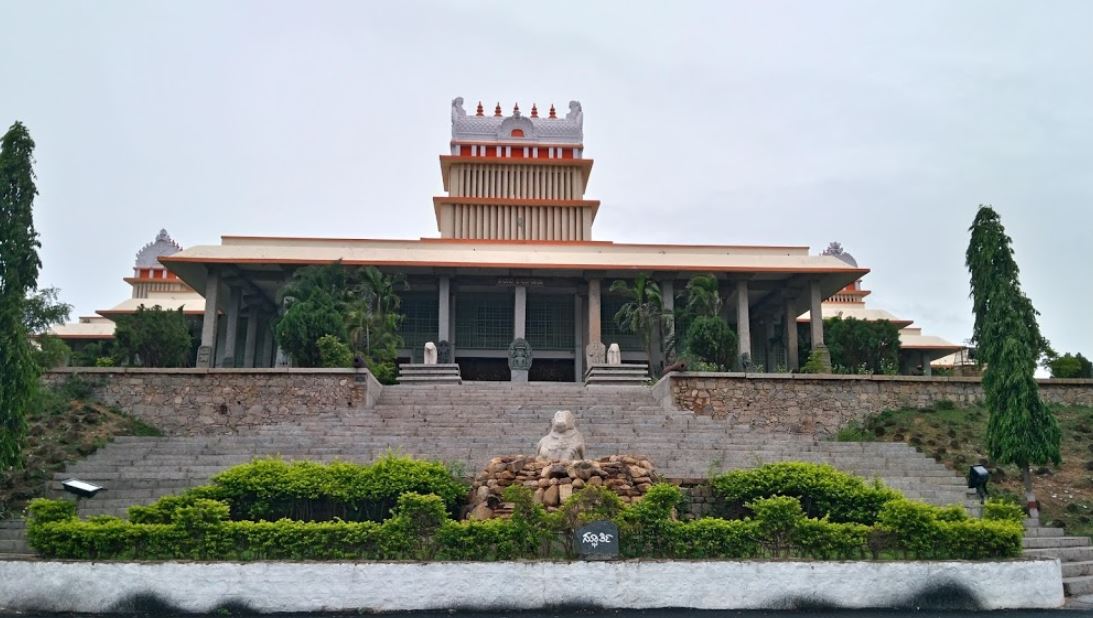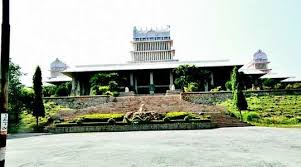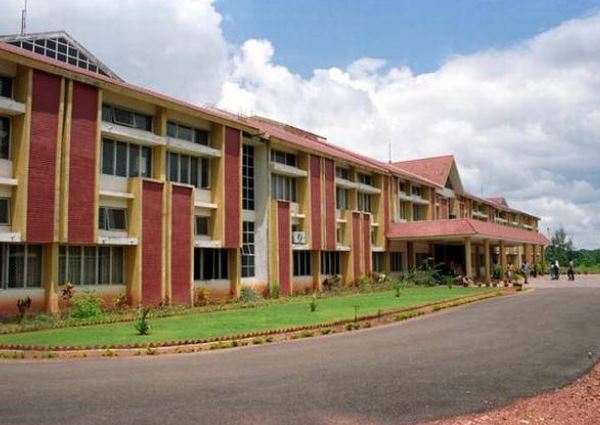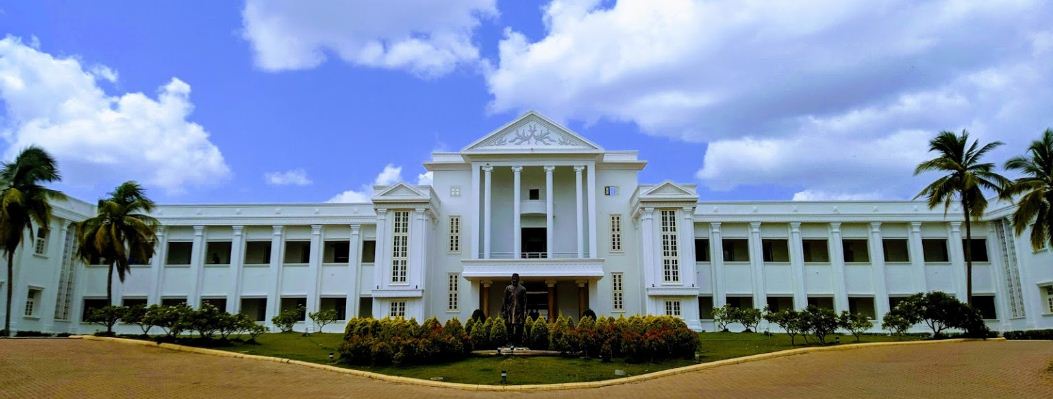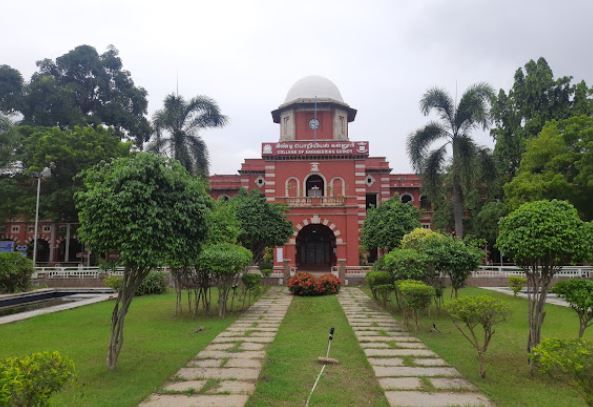
The Government of Karnataka through the Kannada University Act 1991 established Kannada University, Hampi, in 1991.
The demand for such a University was there in Karnataka since the mid 1980s. The Government of Karnataka established a commission under the chairmanship of Sadashiva Wodeyar to look into the demand. This Committee after consulting various intellectuals, education experts, political thinkers, social activists, literary personalities and representatives of people came out with a report and recommended the establishment of the much-needed Kannada University.
Courses Offered
PG
M.Phil.Women's Studies
Course
M.Phil program in Women's Studies shall be for a minimum duration of one year, including course work and a maximum of two years. Extension beyond the above limits will be governed by the relevant clauses as stipulated in the Statute/Ordinance of the individual Institution concerned.
Duration : 1 Year
Eligibility : A candidate typically needs a Master's degree in related field with a minimum of 55% to 60% marks, though some universities may have higher requirements
Career Opportunities
Administrator of a human services department
Advocate for victims of domestic violence and hate crimes
MA in Music course provides an overview of the history and the origins of different kinds of the music as we practice it today. It shows us the proper roots of our music along with giving us intense time and exposure to know and practice music in all of its formats.
The students who are enrolling for the course need to have the genius of the putting all the beats from the aalaps to the end together. They should have the patience to get it right and the tolerance to keep practicing so everyone is in sync and produce a beautiful composition at the end.
Duration : 2 Years
Eligibility : A candidate generally requires a bachelor's degree with a background in music and can involve an entrance exam and audition.
MA Journalism & Mass Communication is a study of different means of communication by which individuals can convey the information to the large segment of the population through mass media. The course generally provides teaching and training regarding reporting, writing, editing, photographing etc.
Students can opt. for specializations in various fields of journalism such as Sports Journalism, Science Journalism, Environment Journalism, Fashion Journalism, Film Making, Advertising, Corporate communications etc.
Duration : 2 Years
Eligibility
Applicants must possess Graduation degree in any stream from a recognized university with minimum 50% marks in it.
Some of the reputed institutes and universities also conduct an entrance examination to get admission in MA (Journalism & Mass Communication)
Higher Studies : Ph.D. and M.Phil in Mass Communication & Journalism
Translation Studies is a multidisciplinary field of research which explores the various forms of interlingual and intercultural communication. Translation Studies examines both oral and written communication (interpreting and translation), and potential research themes may include linguistic characteristics of interpretations or translations, cognitive processes of communication, actors and their roles, and the social effects of language contacts.
Duration : 1 Year
Eligibility : A candidate generally need a master's degree in a relevant field (like English or Translation) with a minimum of 55% marks or an equivalent grade.
Master of Visual Arts (MVA) is a course that enables students to have a higher understanding of visual arts and culture, skills and practices of this field. Other theories like organizational management, art programming and curatorship is also taught under the curriculum. MVA aims to nurture a generation of art administrators who can demonstrate the cultural phenomenon. Those who have a passion for arts and are capable of making strategic and sustainable plans should go for this field. Students of MVA Course go on to become artists who work for government museums, non-profit art organizations as well as commercial sectors in relevant creative industries
Duration : 2 Years
Eligibility : A candidate typically need a bachelor's degree in any discipline, or a specific Bachelor of Fine Arts (BFA) degree, with a minimum of 45-50% marks. Some institutions may require additional criteria like entrance exams
M.Phil Kannada - M.Phil Kannada is a post graduate master degree course which is related with the language of kannada. Kannada language, the official language of the Indian state of Karnataka. It is spoken by more than 33 million people in Karnataka; an additional 11 million Indians may speak it as a second language. The earliest inscriptional records in Kannada are from the 6th century. Kannada script is closely akin to Telugu script in origin. Like other major Dravidian languages, Kannada has a number of regional and social dialects and marked distinctions between formal and informal usage.
Duration : 1 Year
Eligibility : A candidate typically needs a Master's degree in related field with a minimum of 55% to 60% marks, though some universities may have higher requirements
Sanskrit literature, available today, encapsulates all branches of human knowledge. But major part of this literature has not yet been published in text-critical editions due to lack of proper training in methodology. Moreover, literatures of olden days are written in a variety of scripts. Today, many scripts have become obsolete and script experts are becoming rare, which hinders the process of preparing text-critical editions. Pondering over these problems, a Workshop on Manuscriptology and Palaeography was organised to train young scholars about ancient Indian scripts such a Grantha, Newari and Sarada. Moreover, young participants were taught the art of preparing text-critical editions out of ancient manuscripts.
Duration : 1 Year
Eligibility : A candidate typically needs a Master's degree in related field with a minimum of 55% to 60% marks, though some universities may have higher requirements
Master of Philosophy in Ancient History and Culture in a research oriented degree that provides the candidates with proper guidance in order to build up the resources to conduct their own research. Ancient history is the aggregate of past events from the beginning of recorded human history and extending as far as the Early Middle Ages or the Postclassical Era.
Duration : 1 Year
Eligibility : Candidate applying must have successfully completed a Master of Arts in History with minimum of 55% aggregate score. Other than the mentioned criterion candidate can also apply if he/she has scored 55% aggregate score in an exam that is considered equivalent such as ancient History and Culture or Archeology
Epigraphy is the study of Inscriptions on Rocks, Pillars, Temple walls, Copper plates and other Writing-materials like Stones, Metals, Potteries, Woods, Palm leaves, Clothes, Conch shells, Mural paintings and Coins. It is one of the most fascinating and instructive studies. It deals with the art of writing, which distinguishes man from animals and provides us with an instrument for conservation and transmission of historical traditions from generation to generation.
Duration : 1 Years
Eligibility : Should have scored 55% marks
in 2 years post-graduation from
any UGC recognized university.
M.Phil. Development Studies generally focuses on issues related to national and global economic and development issues. This course also concerns with under-privileged sections of society, the economy of a country and many other fields.
M.Phil. Development Studies course is well suited for those students who are desirous of getting specialization in the field of Development Studies and want to serve society. Students seeking admission to M.Phil in Development Studies should possess skills such as analytical and logical thinking, creative mind and they should also possess an enthusiasm for doing something good for society.
Duration : 1 Years
Eligibility : Students who wish to seek admission to M.Phil. Development Studies program must hold a Master’s degree in relevant discipline or equivalent from a recognized university.
Master of Philosophy in Visual Arts (M.Phil.Visual Arts), is a one postgraduate visual art degree courses in India. The aim of the master arts course is developed and increased understanding of visual arts and culture comprehensives skills and practices of organizational management, art programming, and curatorship.
The course is suitable for those candidates wants to increase their knowledge for accelerating their career by exploring and acquire a critical understanding of Visual Arts.The course is designed to provide in-depth knowledge and information about the Visual Arts, The study is focused on theoretical and practical aspects and Principles Techniques in an academic discipline such as Art History, Ceramics, Communication Design, Drawing and Painting, Fibres, Interior Design, New Media Art, Photography, Printmaking, Sculpture, Visual Arts Sculpture, Visual Arts Studies.
Duration : 1 Year
Eligibility : A candidate generally need a master's degree in a relevant field, such as Fine Arts, with a minimum score of 50-55%. Specific requirements, including minimum marks, entrance exams, and interviews, can vary by university, so it is crucial to check the specific program's criteria.
Career Opportunities
The Master degree holder are able to work as, Artist, Painter, Writer, Multimedia Writer, Museum Educator,Professor, Lecture, Poster Artist, Cartoonist, Caricaturist, Theater Designer, Video Artist, Sculptor, Advertising Designer, etc.
M.Phil or Master of Philosophy is a postgraduate academic research programme that is of one year duration. Candidates from any stream –Humanities, Commerce, Science, Law, Teaching etc. can pursue an M.Phil course. In an M.Phil course, aspirants need to study theory as well as practical subjects. Apart from this, candidates also need to conduct research and present their research findings. After completing M.Phil course candidates can consider pursuing a PhD programme.
Duration : 1 Year
Eligibility : Should have scored 55% marks
in 2 years post-graduation from
any UGC recognized university.
The Dravidians were the majority population across the Indian subcontinent before the second millennium. Dravidians had an advanced city culture more ancient than the Aryans, who, as Indian legends tell and some dispute, invaded India from central Asia in several waves around 1500 BCE. Dravidian Nationalism was thus based on three ideologies: dismantling of Brahmin hegemony; revitalization of the "Dravidian Languages" (that include Telugu, Kannada, Malayalam and Tamil) and social reform by abolition of existing caste systems, religious practices and recasting women's equal position in the society.
Duration : 1 Years
Eligibility : A candidate must typically hold a Master's degree in a relevant field like Dravidian Languages, Folklore, or a related humanities subject.
M.Phil Kannada is a post graduate course named as Master of Philosophy in Kannada. The course is nothing but the study about literature, philosophy and linguistic details about Kannada language. Students also get opportunity to learn about research methodologies in same language and will be required to write research papers for Poetry, Drama, history, Fiction, etc based on the same language.
Duration : 1 Year
Eligibility : A candidate typically needs a Master's degree in Kannada with at least 55% marks (or 50% for SC/ST candidates), though specific requirements and admission processes
Career Opportunities
The job prospects are good enough to encourage candidates for pursuing this course. Candidates may enter in teaching line which will give them opportunity to pursue their Doctorate side by side. Language specialists are in very much demand in Academic institutes.Candidates may opt for private tuition as per their availability.Translator job is also a good paying job with lesser efforts depending upon one's grip over the language.People also love to work as freelancer by proving their services in content writing. This kind of job gives freedom till some extent and has choice to do any particular work or not. Such freelancing works are available in the field of research firms, publishing houses, travels and tourism sectors, translation bureaus, etc.
M.Phil. course in History is a special research degree and only granted by selected departments of a university mostly in the fields of Arts, Archaeology, Philosophy, Social Sciences and Theology. Admission to this course is selective and primarily aimed at those candidates opting for an academic career. After finishing these programs, candidates normally enrol for a Ph.D. program.
Those candidates who have analytical skills, critical reasoning and capacity for solving problems and thinking creatively, often through excellent reading are most perfect for it. Candidates with ability to build a contention by choosing and ordering important evidence and then to communicate findings in a clear, structured and persuasive manner, either orally or in writing are also the best match for the program.
Duration : 1 Year
Eligibility : A candidate typically needs a Master's degree in History with at least a 55% aggregate score (or a 50% for reserved categories). Some universities may also require a Bachelor's in History
Folklore Studies is a multidisciplinary field of study concerned with the documentation and analysis of verbal, customary, musical, material, and performance traditions.Students go on to become professors, archivists, oral historians, museum curators, filmmakers, storytellers, and public folklorists.
Duration : 1 Year
Eligibility : A candidate typically needs a Master's degree in related field with a minimum of 55% to 60% marks, though some universities may have higher requirements
The course tends to enter issues in Anthropological theory, analysis and comparison and comparison, interpretation, developing in-depth engagement with an extensive variety of recent and past ethnographies to investigate important debates in the field's present concerns.
The duration of the program is two years and syllabus is spread over two semesters in each year. During the study, the in-depth knowledge is to be embraced on the different parts of Anthropology. There are numerous universities and colleges that are offering the degree program in their campuses in the country.
The program intends to offer to qualify candidates advanced and propelled learning in the socio-cultural, pre-historic, biological, and such parts of human evolution, advancement and development. Anthropologists can discover ample career opportunities in fields such as law, medicine, business, and such experts and professions, other than in regions, for example, community development activities, public health programs, etc.
Duration : 1 Year
Eligibility : A candidate typically needs a Master's degree in Anthropology or a related field with a minimum of 55% to 60% marks, though some universities may have higher requirements
Today the field of social and economic development is being prioritized all over the country. Afterall, it is the people of a nation who either make it or break it. Ph.D. in Development Studies course produces efficient professionals who can change the entire dimension of this field, putting forward tremendous efforts. Through this specific course, one will be able to serve to the marginalized communities who suffer from inequalities and discrimination.
Duration : 6 Years
Eligibility : Candidates generally need a Master's degree in a relevant field (like social sciences, economics, or humanities) with a minimum of 55% aggregate marks. You must also typically pass a university-specific entrance exam
Ancient writings had their own meaning at their respective cultural and historical eras. Therefore, to learn about the past, it is essential to learn what exactly these writings mean. The process of determining, studying and analyzing such ancient graphemes is called epigraphy. Specialists in this field (and the people who are dedicated to the research of these ancient writings) are called epigraphers. In order to conduct a full-scale study of historical documents, epigraphers reconstruct the texts, translate the words and run a dating test to identify the time in which the inscription might have been written. It is also important to note that epigraphy is a branch of archaeology.
Duration : 6 Years
Eligibility : Candidates generally need a master's degree in a relevant field like ancient Indian history, archaeology, or linguistics, with a strong academic record. The specific criteria can vary significantly by university and your chosen area of research.
Folklore is a slippery term to define. In the past, terminology ranging from "bygones" to "popular antiquities" was used to describe traditional culture. When the term "folk-lore" was introduced in 1846 by the English scholar William J. Thoms, scholars of that time felt satisfied that it gave a proper name into their investigations of vernacular tales, customs, and beliefs that were in danger of vanishing.
Folklore emerged as a discipline in the United States in the late 19th century. Literary scholars interested in the oral and traditional sources of Chaucer and Shakespeare converged with anthropologists trying to understand the vernacular expressions of non-literate peoples; together, they founded the American Folklore Society in 1888. In continental Europe and Latin America, folklore has a slightly different genealogy; there it was more directly linked to the process of nation-building, and folklore was seen as evidence for distinctive origins and the basis for the construction of a high culture in the vernacular.
Duration : 6 Years
Eligibility :
Candidates generally need a master's degree in a related field like folklore, anthropology, English, or cultural studies, with a strong academic record and research experience.
The visual arts are art forms that create works that are primarily visual in nature, such as ceramics, drawing, painting, sculpture, printmaking, design, crafts, photography, video, film making and architecture. These definitions should not be taken too strictly as many artistic disciplines (performing arts, conceptual art, textile arts) involve aspects of the visual arts as well as arts of other types. Also included within the visual arts are the applied arts such as industrial design, graphic design, fashion design, interior design and decorative art.
Duration : 6 Years
Eligibility : Candidates generally need a Master's degree in a related field (like Visual Arts, Fine Arts, or Design) with at least 55% marks or an equivalent GPA from a recognized university.
Ph.D. in Anthropology course explores the paradigms in social and cultural anthropology and biological anthropology and the contribution of Indian anthropologists. The candidates under this course also examine the contribution of social reformers and thinkers to Indian culture and society and they are educated in the ethics of research. Fieldwork is carried out under the supervision of a professor or course advisor and they also carry out the assessments at the end of the semester.
The course is beneficial in terms of expanding the horizons of what is already known of humanity and human nature and re-examining what we consider as truths in history and the contemporary world. Any doctorate course is essentially an exercise in the production of knowledge, but of course, coursework is essential to building a base in order to explore further areas that haven’t been
Duration : 6 Years
Eligibility : Candidates must typically have a master's degree in anthropology or a related field, often with a minimum GPA, and a strong academic record.
Kannada has another less popular name as 'Canarese or Kanarese' and it is one of the Dravidian languages in India. It is spoken in Karnataka predominantly and in some other states like Tamil Nadu, Andhra Pradesh, Telangana, Kerala, etc it is spoken by linguistic minorities. It is considered as a scheduled language of India and official language of Karnataka. This makes it very important for candidates to learn Kannada if they want to have good jobs in Karnataka. Through Doctorate degree in Kannada (PhD in Kannada), candidates learn each and every detail about the language including its history, evolution, different forms, famous authors and many more.
Duration : 6 Years
Eligibility : Candidates must typically have a master's degree in related field, often with a minimum GPA, and a strong academic record.
Career Opportunities
These candidates are ideal to work in the field of teaching. They can also become a Translator for translating books, journals, etc. They can work as a freelancer for content development in Kannada. They can start their own tuition classes and can also become interpreter (general/ liaison/ consecutive).
The field of women's studies include standard point theory, intersectionality, multiculturalism, transnational feminism, and reading practices associated with critical theory, post-structuralism, and queen theory. The field researchers and critiques study societal norms of gender, race, class, sexuality, and other social inequalities.
The development of critical reading, writing, and oral expression are often key to these courses, which can be listed across curricula in the humanities, social sciences, and sciences. Women studies programs are involved in social justice and design curricula that are embedded with theory and also activism outside of the classroom. Ph.D. in Women Studies course offer internships that are community-based allowing students the opportunity to gain a better understanding of how oppression directly affects women's lives
Duration : 6 Years
Eligibility : Candidates must typically have a master's degree in related field, often with a minimum GPA, and a strong academic record.
Dravidian peoples or Dravidians are the present and past speakers of any of the Dravidian languages. The origins of the Dravidians are a "very complex subject of research and debate". They may have been indigenous to the Indian subcontinent, but origins in, or influence from, West-Asia have also been proposed.
Duration : 6 Years
Eligibility : A candidate generally need a master's degree in a relevant field with a minimum percentage of marks, often 55%. You must also typically pass a university-level entrance exam or a national-level exam
The tribes and their tracts constitute very significant parts of India, comprising about 8.13 per cent and 18.70 per cent of the population and the area of the country, respectively. Beginning with anthropological interest of studying tribes, frontiers of knowledge in the subject has expanded across disciplines and beyond with a wide range of academic engagements over the years. However, time has come, when it is essential that Tribal Studies evolve as a subject of its own critically dealing with theoretical, conceptual and empirical issues of tribes and their development with a strong theory, policy and practice perspective.
Duration : 6 Years
Eligibility : Candidate generally need a master's degree in a related field like Anthropology, Sociology, or Tribal Studies with a minimum of 55% marks. You must also pass a university-level entrance
Manuscriptology/Palaeography/Codicology is the scientific and structural study of hand written document credited with fair antiquity. They are sources of cultural heritage and history. The treasure of wisdom has come down to people in the form of manuscripts. Written in different Indian languages they are spread all over the country in different institutions, libraries, monasteries and temples and in several private collections. Classification of manuscripts are based on the materials used for writing like palm leaf manuscript, paper manuscripts, birch bark manuscript, wood manuscript, Hansipatra manuscript, Talpatra manuscript etc and also the subject matter of the manuscripts like Vedas, Dharmasastra, Itihasa, Purana, Mahatmya, Darsana, Tantra, mantra, Ayurveda etc. Surveys for manuscripts in the past years identified many collections and newer collections must be identified and preserved. Conservation of manuscripts is carried out through 33 Manuscript Conservation Centres (MCCs), besides organizing preventive and curative conservation workshops at different locations of the country as per priorities. The National Database of Manuscripts, Kriti Sampada is available on the internet through the Mission's website. Manuscriptology is the process of conserving the future for the past. It keeps the pulse of the past. It preserves the literary, linguistic, artistic and cultural heritage. It is very essential to conserve the manuscripts. By conserving these manuscripts and using information contained in it will open a new horizon in fields of knowledge. So manuscript preservation and conservation is essential.
Duration : 6 Years
Eligibility : A candidate generally needs a Master's degree in a related field (like Sanskrit or a related humanities discipline) with at least 55% marks or its equivalent, according to University Grants Commission (UGC) guidelines.
Dance is an art form that mostly involves movement of the body in rhythm with music. It is a form of physical expression presented in a spiritually or performance-based setting.Music comprises a combination of vocal music, instrumental music and various dance forms
Duration : 6 Years
Eligibility : A candidate generally need a master's degree in a relevant field with a minimum percentage of marks, often 55%. You must also typically pass a university-level entrance exam or a national-level exam
The doctoral program, Ph.D. in Translation Studies, provides students in-depth knowledge of some key aspects of language and linguistics, like Translation and Interpretation.
The students acquire the knowledge of the domain by going through various interdisciplinary subjects during their course. Various compulsory and optional subjects enable students to have a thorough understanding of the theoretical and applied aspects of Translational Studies.
Duration: 6 Years
Eligibility : Should have scored 55% marks
in 2 years post-graduation from
any UGC recognized university.
Ph.D.History is a Doctorate level History course.History is the study of written events and records of humanity.Understanding history leads to an understanding of mankind and gives insight into the future of our civilization.It allows students to study some of the world's most historical people,events and cultures.Students are empowered to see the big picture of how the world has evolved
Duration : 6 Years
Eligibility : Candidates generally need a master's degree in a relevant field like ancient Indian history, archaeology, or linguistics, with a strong academic record. The specific criteria can vary significantly by university and your chosen area of research.
Ancient Indian History and Archaeology offers a deeper insight into the practices of archaeology and is most suited for someone with ability in solving problems along with a huge inclination and interest towards history and archaeology in general.
The course provides access to topics like the practices and methods of archaeology and the integration of applied sciences with archeology. The course is fascinating and helps in building and nurturing the mindset required for the ethical and creative aspects of life associated with being a historian or an archivist.
Duration : 6 Years
Eligibility : Candidates must have passed your 10+2 (or equivalent) from a recognized board with a minimum of 50% aggregate marks, although this percentage can vary by institution
Doctor of Literature [D.Litt.] course specialize in branches of the subject such as literature, international literature, contemporary literature, or historical literature. This course has coursework may include literature, fundamentals of literature, and its related areas like writing, composition, linguistics, poetry, fiction, creative non-fiction, and related study. In this course, students gain skills from interpersonal communication techniques to understand social and complex philosophical issues.
Duration : 2 Years
Eligibility : The admission for D.Lit.
course will be provided by
the university to those who
have special knowledge on
related particular field even
if they have not holding
formal educational degree.
Postgraduate Diploma in Translation is a postgraduate Diploma level Language course.The Course aims to teach Translation from English to Hindi and vice-versa.This course has been prepared to keep in view the need for translation in our socio-cultural and professional areas.
Duration : 1 Year
Eligibility :A candidate generally need a bachelor's degree in any discipline from a recognized university. Some institutions may have additional requirements, such as a minimum percentage of marks in your bachelor's degree
PG Diploma in Journalism course introduces the expectations and traditions of the journalism, as well as opportunities and resources available for students in journalism. This course focuses on the principles and practices of journalism in a democratic society. In this course, students will learn journalism impacts such as private lives, public policy, and the context of the contemporary convergence of multimedia.
Duration : 1 Year
Eligibility : A candidate generally need a bachelor's degree in any discipline from a recognized university. Some institutions may have additional requirements, such as a minimum percentage of marks in your bachelor's degree
Anthropology is the study of humanity. Anthropology has its roots in science, social science and humanities. It can be divided into biological or physical anthropology, social or cultural anthropology, linguistic anthropology, applied anthropology and archeology.
Duration : 1 Year
Eligibility : A candidate generally need a bachelor's degree with a minimum of 50% marks. While the degree can be in any discipline, some institutions may prefer candidates from social science or humanities backgrounds.
Epigraphy is the study of inscriptions, or epigraphs, as writing; it is the science of identifying graphemes, clarifying their meanings, classifying their uses according to dates and cultural contexts, and drawing conclusions about the writing and the writers.
Duration : 1 Year
Eligibility : A candidate generally need a bachelor's degree with a minimum of 50% marks. While the degree can be in any discipline, some institutions may prefer candidates from social science or humanities backgrounds.
The department came into existence along with the establishment of University in 1992. The main aim of the Department is to carry out research on Kannada Linguistics and related areas. The department’s mandate is to work on the way Kannada language is historically changing and intervene in the process of change in its usage and structure. The Department has carried out several projects to this effect till today and has published many of its outcomes. The department is planning to have a phonetic lab and school of Language management in future. The department Library has books 4500 books in English and Kannada which are available for reference.
Duration : 1 Year
Eligibility : A candidate generally need a bachelor's degree in any discipline from a recognized university. Some institutions may have additional requirements, such as a minimum percentage of marks in your bachelor's degree
Manuscriptology is a branch of study in Archaeology about history or Literature by means of very old Palm-leaf manuscript's, Rare Paper Manuscript's, Epigraphy and Underwater archaeology .Manuscriptology is another word for codicology, namely the study of history and literature through the use of hand-written documents. The term is in use particularly among scholars of South Asian cultural history because many South Asian manuscripts are not codices in the strict sense of the word.
Eligibility: A candidate generally need a bachelor's degree in any discipline from a recognized university. Some institutions may have additional requirements, such as a minimum percentage of marks in your bachelor's degree
Bachelor of Visual Arts is an undergraduate Fine Arts program.The Bachelor of Visual Arts is a three-year full-time degree in which students major in any one of the disciplines offered by the School's Workshops.Bachelor of Arts (BVA) in Visual Arts offers unique opportunities to investigate an array of courses in art history,animation,interactive forms,film,graphic design,photography,video,print media and foundation.
Duration : 3 Years
Eligibility : Candidates must have passed your 10+2 (or equivalent) from a recognized board with a minimum of 50% aggregate marks, although this percentage can vary by institution
Bachelor of Visual Arts is an undergraduate Fine Arts program.The Bachelor of Visual Arts is a three-year full-time degree in which students major in any one of the disciplines offered by the School's Workshops.Sculpture is an art of creating objects featuring a person, thing or an idea using materials like terracotta, stone, clay, wood, metal etc. The primitive art has been updated with new forms and has a course of evolution. A sculptor has expertise in carving the man-made or natural objects into art pieces. Sculpture has its roots in folk arts, religion, traditions and culture.It is the visual expression of three dimensions in a solid form. It is different from painting due to the three-dimensional feature involved in it and thus calls for intensive training. When creating a sculpture different methods like modeling, molding, casting, carving, etc. are used.
Duration : 3 Years
Eligibility : Candidates must have passed your 10+2 (or equivalent) from a recognized board with a minimum of 50% aggregate marks, although this percentage can vary by institution
The Bachelor of Music is designed to allow students with superior performance ability and potential to extend their knowledge and skill bases and to develop artistic autonomy in the area of their principal study.Students will have demonstrated superior performance ability in recital and the capacity to develop and carry out a specialised research project.
Duration : 3 Years
Eligibility : Candidates generally need to have completed your higher secondary education (10+2) with a minimum of 50-60% marks, though this varies by institution. Most programs also require proof of musical ability, either through prior music education or by passing an entrance exam or audition